

Choosing the right kettlebell weights can feel overwhelming, especially when you’re eager to start your fitness journey. You might wonder which weights will help you achieve your goals without causing injury or frustration.
Imagine your workouts becoming more effective and enjoyable simply by selecting the perfect kettlebell. By understanding your needs and fitness level, you can make a confident decision that transforms your exercise routine. Dive into this guide to discover how to pick the ideal kettlebell weights that will keep you motivated and bring noticeable results.
Ready to unlock your potential and elevate your fitness game? Let’s get started!
Choosing Kettlebell Weights
Selecting the right kettlebell weight depends on your fitness level and goals. Beginners might start with a 10 to 15-pound kettlebell, while those experienced in strength training may opt for 20 to 30 pounds for a challenge.
Choosing the right kettlebell weights is essential for effective workouts. It’s not just about picking up any weight. The correct weight can enhance your exercise routine and prevent injuries. Your choice should depend on your fitness level and training goals. Understanding these factors can guide you to make the best decision.Assessing Fitness Level
Start by evaluating your current fitness level. Are you a beginner or more advanced? Beginners should opt for lighter weights. This helps in mastering form and technique. Advanced users can handle heavier weights for more resistance. Listen to your body. If a weight feels too heavy, go lighter. Safety is more important than lifting heavy.Considering Training Goals
Define your training goals before choosing a kettlebell. Want to build strength? Choose heavier weights. Looking to improve endurance? Lighter weights with more reps work best. Consider your exercise routine. Different exercises may require different weights. Tailor your kettlebell choice to your specific needs.Types Of Kettlebells
Kettlebells are versatile tools for strength and fitness. Choosing the right type can enhance your workout experience. Here’s a guide to different types of kettlebells available for purchase.
Standard Kettlebells
Standard kettlebells are classic. Made from cast iron, they have a round shape. The handle is thick and smooth. They are great for beginners and seasoned athletes. Available in various weights, they suit different fitness levels. Easy to find in most sports stores.
Adjustable Kettlebells
Adjustable kettlebells are flexible. Ideal for those with limited space. They allow you to change weights easily. A single kettlebell can replace several fixed-weight ones. They are budget-friendly and space-saving. Perfect for home workouts.
Competition Kettlebells
Competition kettlebells are uniform in size. Regardless of weight, their size remains the same. Designed for serious athletes and competitions. They have a steel body and a firm grip. Color-coded for easy identification. Suitable for those who train for competitions.
Weight Recommendations For Beginners
Choosing the right kettlebell weight is crucial for beginners. It ensures safe and effective workouts. The right weight helps in building strength gradually. It also prevents injuries. Start light and progress slowly. Let’s explore the recommended starting weights for men and women.
Men’s Starting Weights
Men new to kettlebells should begin with a moderate weight. A 16 kg (35 lbs) kettlebell is a good start. It offers a balance between challenge and safety. For lighter exercises, consider 12 kg (26 lbs). This weight is suitable for exercises like kettlebell swings and squats.
Women’s Starting Weights
Women often start with lighter weights. A 8 kg (18 lbs) kettlebell is commonly recommended. It allows for control and proper form. For heavier exercises, 12 kg (26 lbs) can be used. This provides a bit more challenge while still manageable. Always prioritize form and control over weight.
Weight Recommendations For Intermediate Users
Choosing the right kettlebell weight is crucial for intermediate users. It ensures safety and effectiveness during workouts. As you progress, selecting the appropriate weight helps build strength and endurance. This section guides intermediate users in choosing the best kettlebell weights for their fitness journey.
Gradual Progression
Intermediate users should focus on gradual progression. Start with a weight that challenges you but is manageable. This prevents injury and builds strength over time. Increase the weight slowly as you gain confidence and strength. Aim for a weight that allows you to complete sets with proper form.
Common Intermediate Weights
For men, a common intermediate weight is 16 kg (35 lbs). This weight helps in improving strength and endurance. Women often find 12 kg (26 lbs) suitable as an intermediate weight. It offers a good balance of challenge and control. These weights are popular choices for enhancing fitness levels. They provide the right challenge for many intermediate workouts.
Weight Recommendations For Advanced Users
Choosing the right kettlebell weight is crucial for advanced users. As experience grows, so does the need for heavier weights. Advanced lifters should aim for a balance between strength and safety. Selecting the correct weight ensures effective workouts and reduces injury risk.
Heavy Lifting Techniques
Advanced users should focus on heavy lifting techniques. These techniques enhance strength and endurance. Heavier kettlebells challenge muscles more. Start with weights that are 50% heavier than intermediate levels. This increase boosts muscle growth and power.
Use proper form to prevent injuries. Keep your back straight and core engaged. Practice swings, cleans, and snatches with control. Gradually increase weight as confidence grows. Consistency improves strength over time.
Personalized Weight Selection
Personalized weight selection is key for advanced users. Consider personal strength levels and goals. Weights should align with individual capabilities. Test different weights to find the right fit. Choose a weight that allows 5-10 reps with proper form.
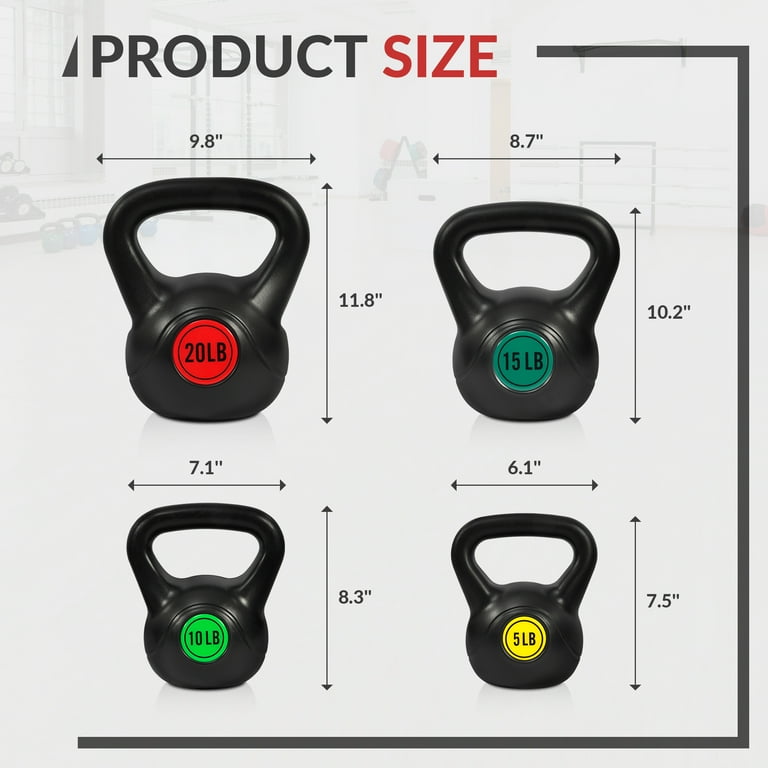
Consider the type of exercises you plan to perform. Some movements require heavier weights than others. Swings and squats may need more weight. Presses and Turkish get-ups might need lighter weights. Adjust according to your training routine.
Credit: www.walmart.com
Common Mistakes In Choosing Weights
Choosing the right kettlebell weights can be tricky. Many beginners make common mistakes that hinder their progress. Understanding these pitfalls helps in making an informed decision. Let’s dive into some frequent errors people make.
Overestimating Strength
Many start with weights that are too heavy. This often leads to injury. It’s crucial to assess your current strength honestly. Begin with lighter weights to build confidence. Gradually increase as your strength improves. This approach ensures safe and effective workouts.
Ignoring Form And Technique
Proper form and technique are vital in kettlebell training. Heavy weights can compromise your form. This increases the risk of injury. Prioritize mastering the technique first. Use a weight that allows you to maintain proper form. This builds a strong foundation for future progress.
Expert Tips For Buying Kettlebells
Kettlebells are a great addition to any workout routine. They are versatile and effective. Choosing the right kettlebell can be tricky, though. Here are some expert tips to help you make an informed decision. These tips focus on quality, material, and testing before purchase.
Quality And Material Considerations
Quality matters when buying kettlebells. A well-made kettlebell will last longer. It also provides a better workout experience. Look for kettlebells made from solid cast iron. They are durable and provide a balanced weight.
Check for a smooth finish. It should not have sharp edges. This ensures a comfortable grip. The handle’s diameter is important too. It should fit your hand comfortably.
Consider the coating. A powder-coated finish offers a good grip. It also protects against rust. Vinyl-coated kettlebells are good for indoor use. They protect the floor and reduce noise.
Testing Before Purchase
Test the kettlebell before buying. Lift it to check the weight. It should challenge you but not strain you. The handle should feel comfortable in your hand.
Try different exercises. See how the kettlebell feels with swings and lifts. It should be smooth and balanced. This ensures a safe workout.
If buying online, read reviews. Look for comments on weight accuracy and handle comfort. This helps in making a better choice.
Budgeting For Kettlebells
Choosing the right kettlebell weights involves more than just strength goals. Budgeting plays a key role in your decision. It’s important to find a balance between price and quality. Investing wisely ensures you get the most out of your workouts.
Balancing Cost And Quality
Quality kettlebells can vary in price. Cheap options might not last long. Look for durable materials like cast iron. Coated handles offer better grip. Avoid painted kettlebells; they chip easily. You want a product that withstands regular use.
Check customer reviews before buying. Feedback can highlight issues or benefits. A higher price often indicates better manufacturing. But don’t overpay for brand names alone. Focus on material and construction quality instead.
Long-term Investment
Think of kettlebells as a long-term investment. Good quality kettlebells can last for years. Spending more upfront can save money later. You avoid frequent replacements with durable weights. They remain consistent in weight and feel.
Consider adjustable kettlebells if budget allows. They offer multiple weights in one unit. This can reduce the need for future purchases. It’s a cost-effective solution for growing strength needs.
Remember, the right investment supports your fitness journey. Choose wisely to ensure lasting benefits.
Maintaining And Storing Kettlebells
Choosing the right kettlebell weights depends on your fitness level and goals. Beginners might start with 10 to 15 pounds. Advanced users can opt for heavier weights like 20 to 30 pounds. Always store kettlebells in a dry place to prevent rust and maintain their condition.
Maintaining and storing kettlebells properly extends their lifespan. It ensures safety and efficiency during workouts. Proper care and smart storage solutions are crucial. They keep your exercise area organized and prevent damage to your equipment.Proper Care Techniques
Regular cleaning prevents rust and keeps kettlebells looking new. Use a damp cloth to wipe them down after each use. Avoid harsh chemicals; they can damage the coating. Check for any cracks or chips. Address these issues immediately to prevent further damage. Store kettlebells in a dry, cool place. Moisture can lead to rust and weaken the metal. If kettlebells get wet, dry them thoroughly before storing. Proper care keeps your equipment safe and ready for use.Space-saving Storage Solutions
Organize kettlebells efficiently to save space. Use a dedicated rack or shelf for storage. A rack keeps them off the floor and easy to access. For small spaces, consider wall-mounted racks. They free up floor space and keep your area neat. Arrange kettlebells by weight for easy selection during workouts. Stack smaller kettlebells inside larger ones. This saves room and keeps them organized. Regularly check the storage area for dust and dirt. Clean it often to maintain a tidy workout space. Proper storage solutions enhance safety and accessibility. They make your exercise environment more inviting and efficient.
Credit: www.amazon.com

Credit: recxpress.com.au
Frequently Asked Questions
What Weight Kettlebells Should I Get?
Choose kettlebells based on your fitness level. Beginners should start with 8-12 kg for men and 4-8 kg for women. Intermediate users can try 12-16 kg for men and 8-12 kg for women. Advanced users might opt for 16-24 kg or more.
Always prioritize proper form and safety.
Is A 20 Lb Kettlebell Too Light?
A 20 lb kettlebell may be light for experienced lifters. Beginners might find it suitable for starting strength training. Consider your fitness level and goals to determine the appropriate weight. Adjust as you progress for optimal results and safety.
How Big Of A Kettlebell Should I Buy?
Choose a kettlebell based on your fitness level. Beginners typically start with 8-12 kg (18-26 lbs). Intermediate users might use 12-16 kg (26-35 lbs), while advanced lifters opt for 16-24 kg (35-53 lbs). Ensure the weight allows you to perform exercises with proper form and control.
Is A 50 Lb Kettlebell Too Heavy?
A 50 lb kettlebell may be too heavy for beginners. It’s essential to assess your fitness level first. Start with lighter weights and gradually increase. Consult a fitness professional to ensure proper form and avoid injury. Tailor your kettlebell weight choice based on personal strength and experience.
Conclusion
Choosing the right kettlebell weight is essential. Start with a lighter weight. It helps build confidence and proper form. As you progress, increase the weight gradually. This ensures you challenge your muscles. Remember, comfort and safety come first. Listen to your body and its needs.
Consult a fitness professional if unsure. They provide valuable guidance tailored to you. Investing in quality kettlebells is wise. They last longer and improve workouts. Enjoy your fitness journey with kettlebells. They are versatile and effective tools. Happy lifting and stay consistent!