
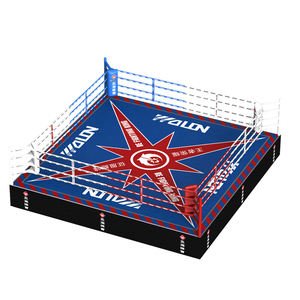
Are you curious about the dimensions of a boxing ring? Whether you’re a boxing enthusiast or just someone with a passing interest, understanding the size of a boxing ring can add a whole new layer to your appreciation of the sport.
You might wonder why the size matters at all. Well, it plays a crucial role in the strategies fighters use, the pace of the match, and even the excitement you feel as you watch each punch being thrown. Imagine stepping into the shoes of a boxer, feeling the tension in every inch of the ring.
It’s more than just ropes and corners; it’s the stage where drama unfolds. Stay with us, and you’ll discover how the size of a boxing ring impacts the thrilling world of boxing.
Standard Boxing Ring Sizes
Standard boxing ring sizes are crucial for fairness and safety in the sport. These dimensions ensure fighters have enough space to maneuver while maintaining a controlled environment. Boxing rings vary slightly depending on the level of competition, ranging from amateur to professional settings.
Professional Ring Dimensions
Professional boxing rings are typically larger to accommodate skilled fighters. The standard size is between 16 and 20 feet square. This measurement refers to the inside area where the fight occurs. The ropes add additional inches to the overall size. A larger ring provides room for advanced tactics and strategies. It allows fighters to move freely and adjust their positions. The ring’s platform is elevated, usually around three to four feet high. This elevation enhances visibility for spectators. A professional ring is surrounded by four ropes. These ropes are spaced 12 to 16 inches apart. The ropes keep fighters inside the ring during the match.
Amateur Ring Specifications
Amateur boxing rings are slightly smaller than professional rings. They generally measure between 16 and 18 feet square. This size ensures safety for less experienced fighters. The smaller size encourages more engagement between opponents. It requires fighters to rely on technique rather than movement. The ring’s platform is also elevated, similar to professional rings. The height is typically three feet. Amateur rings are enclosed by four ropes. These ropes prevent fighters from falling out during intense matches. Rope spacing remains consistent, usually 12 to 16 inches apart. The design of amateur rings focuses on safety and skill development.

Credit: www.youtube.com
Factors Influencing Ring Size
Understanding the size of a boxing ring can be quite fascinating. The dimensions are not just random numbers but a result of various influencing factors. These factors ensure the ring is suitable for different types of events and adheres to specific standards.
Regulatory Bodies And Guidelines
Boxing rings are governed by rules set by various regulatory bodies. Organizations like the International Boxing Federation (IBF) and World Boxing Association (WBA) have specific guidelines on ring dimensions. For example, they typically require the ring to be between 16 to 20 feet on each side inside the ropes.
These dimensions are crucial for maintaining fairness and safety. They prevent boxers from having too much or too little space, ensuring a balanced fight. Can you imagine a fight in a ring that’s too small or too big?
Event Type And Location
The type of boxing event can also dictate the ring size. Amateur events often use smaller rings compared to professional bouts. This is because amateur fights are shorter, and the smaller space encourages more engagement between boxers.
Location also plays a significant role in determining ring size. Events in larger venues might feature bigger rings to accommodate audience visibility. If you’ve ever attended a boxing match, you might have noticed how the ring size complements the venue’s atmosphere.
Understanding these factors provides a clearer picture of why ring sizes vary. Next time you watch a boxing match, pay attention to the ring size and consider the influences behind it. It adds another layer to the appreciation of the sport.
Construction And Materials
A boxing ring measures 16 to 20 feet on each side. The size can vary based on competition rules. Rings are usually surrounded by four ropes, ensuring safety during matches.
The construction of a boxing ring involves careful planning and precise materials. Each component plays a crucial role in ensuring safety and functionality. Understanding these elements enhances the appreciation for the sport.Flooring And Padding
The flooring of a boxing ring is firm but cushioned. It usually consists of wooden planks covered with thick padding. This padding absorbs shock, protecting athletes from serious injury. A canvas or vinyl cover stretches over the padding. This cover provides a non-slip surface, crucial during intense matches. The balance between firmness and softness is key. It allows for safe footwork while minimizing impact during falls.Rope And Corner Post Details
Ropes and corner posts define the ring’s boundaries. Typically, a boxing ring has four ropes. These ropes are thick and tightly woven for strength. They are covered in a soft material to prevent cuts and bruises. Corner posts anchor these ropes and are placed at each corner. They provide stability and are padded for safety. This padding prevents injuries during accidental collisions. The ropes and posts create a secure enclosure for fighters.
Credit: www.instagram.com
Historical Evolution Of Ring Dimensions
Boxing rings have seen significant changes over the years. Their dimensions have evolved from simple arenas to standardized spaces. Understanding this evolution helps appreciate the sport’s rich history.
Early Boxing Arenas
In the early days, boxing was held in informal settings. Fighters used open spaces or rough wooden structures. There were no official measurements for the ring size. This setup allowed flexibility but lacked consistency. Spectators often gathered around, forming a natural boundary.
These early arenas varied widely in size. It depended on the venue and local customs. Some were small, barely accommodating fighters. Others were larger, offering more room for movement. The absence of standard dimensions posed challenges for fairness.
Modern Adaptations
Today, boxing rings follow strict guidelines. The standard size is set by organizations like the World Boxing Association. Typically, rings measure between 16 and 20 feet square. This standardization ensures fairness and safety.
Modern rings feature padded floors and ropes. These elements protect fighters and enhance the viewer’s experience. Rings are elevated, offering better visibility for spectators. This design reflects the sport’s growth and professionalization.
Impact Of Ring Size On Boxing Strategies
Ring size influences boxing strategies significantly. Smaller rings favor aggressive fighters by limiting movement space, while larger rings benefit defensive boxers by providing more room to maneuver.
Understanding the impact of ring size on boxing strategies can completely change how you view a match. The dimensions of a boxing ring, typically ranging from 16 to 24 feet per side, influence every move a fighter makes. Larger rings allow more room to maneuver, while smaller ones force boxers into closer combat. But how exactly does this affect a boxer’s strategy?Movement And Footwork
In a larger ring, boxers often have the advantage of space to execute more dynamic footwork. This extra room allows agile fighters to move around their opponent, creating better angles for attacks and evading punches. Conversely, in a smaller ring, boxers have less space to move, which can limit their ability to dodge and weave. This can be particularly challenging for fighters who rely heavily on their footwork to outmaneuver opponents. Have you ever noticed how a larger ring can make a fight feel more like a dance, while a smaller one turns it into a grueling clash? It’s all about how much space there is to operate.Offensive And Defensive Tactics
The size of the ring can dictate whether a boxer adopts a more offensive or defensive stance. In a spacious ring, defensive strategies like counter-punching and maintaining distance can be more effective, allowing fighters to wear down their opponent over time. In contrast, a smaller ring often encourages a more offensive approach. With less room to escape, boxers might focus on cornering their opponent and delivering powerful combinations. Do you prefer watching a strategic game of cat and mouse or an intense showdown where every punch counts? The ring size might just influence your answer more than you think. Understanding these dynamics can give you deeper insight into the strategies at play in the ring. Whether you’re a fan or a fighter, recognizing the influence of ring size can enhance your appreciation of the sport.
Credit: southwestregionalpublishing.com
Frequently Asked Questions
What Size Is The Olympic Boxing Ring?
The Olympic boxing ring measures 6. 1 meters by 6. 1 meters inside the ropes. The outer dimensions extend to 7. 8 meters by 7. 8 meters.
What Size Ring For Tyson Vs Paul?
The Tyson vs Paul fight uses a standard professional boxing ring. Its size is typically 20×20 feet. This size is commonly used for high-profile boxing matches, ensuring ample space for movement and strategy. The ring’s dimensions are crucial for maintaining fair competition and safety for both fighters.
How Big Is A Wwe Ring?
A WWE ring measures 20 feet by 20 feet. The platform is elevated and surrounded by four ropes. The ring is constructed for durability and safety during matches. The size allows for ample space for wrestling maneuvers and actions.
What Is The Diameter Of A Boxing Ring In Square Feet?
A standard boxing ring is square, not circular. It typically measures 16 to 20 feet per side. The area ranges from 256 to 400 square feet, depending on the size.
Conclusion
Boxing rings vary, but most have standard sizes. These sizes ensure fair play and safety. The common dimensions are 16 to 20 feet square. This space lets boxers move freely. Size impacts strategy and style. Smaller rings mean less room to evade.
Larger rings offer more movement. Understanding ring size helps appreciate boxing tactics. Boxers adapt to different ring sizes with skill. Next time you watch a match, notice the ring. It plays a vital role in the fight’s dynamics. Knowing this adds depth to the boxing experience.