
Ever wondered how businesses decide on the perfect balance between supply and demand? Or how they determine the right price for their products in the short term?
If you’re curious about these intriguing dynamics, you’re in the right place. Today, we’re diving into the concept of “Short Run Equilibrium” in economics. This fascinating topic not only helps businesses make smarter decisions but also gives you insights into the economic forces at play around you.
By understanding short run equilibrium, you can gain a clearer picture of how markets operate and how prices stabilize in the short term. Stick with us as we unravel this economic mystery and empower you with knowledge that can enhance your economic savvy.
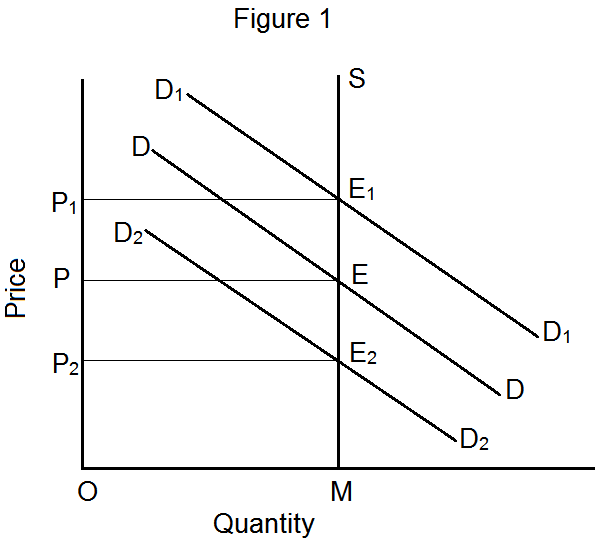
Credit: owlcation.com
Short Run Equilibrium Basics
Understanding short run equilibrium in economics is crucial. It helps us see how markets function in a limited time frame. This concept focuses on immediate reactions to changes in supply and demand. Short run equilibrium is a snapshot of the economic balance.
Definition And Key Concepts
Short run equilibrium occurs when supply meets demand. This happens without changing the number of firms in the market. In the short run, certain factors remain fixed. These include production capacity and technology. Prices adjust to balance supply and demand. Firms may not reach optimal production levels.
Key concepts involve fixed inputs and variable outputs. Firms make decisions based on existing resources. They adapt to market conditions quickly. Short run equilibrium is temporary. Long-term changes can alter this balance.
Importance In Economic Analysis
Short run equilibrium is vital for analyzing market dynamics. It provides insights into immediate economic conditions. Economists study it to predict short-term outcomes. This helps in making informed decisions.
It aids in understanding price fluctuations. Analysts can gauge consumer behavior. Short run equilibrium reveals how markets respond to sudden changes. This understanding is essential for policy-making and business strategies.

Credit: quizlet.com
Factors Influencing Short Run Equilibrium
Understanding the factors influencing short run equilibrium in economics is crucial for grasping how markets adjust in the face of changing conditions. Short run equilibrium occurs when the quantity supplied equals the quantity demanded, but only in the short term. This balance is affected by various dynamic components that shape the market’s immediate response. Let’s dive into these factors.
Demand And Supply Dynamics
Demand and supply dynamics are the core elements that dictate short run equilibrium. Changes in consumer preferences, income levels, and population can swiftly alter demand. Imagine walking into your favorite coffee shop only to find it’s packed with more people than usual because of a sudden cold snap. The increased demand for hot beverages affects the equilibrium, often leading to temporary shortages.
Supply, on the other hand, is influenced by factors like production capabilities and resource availability. If the coffee shop’s supplier delivers less milk, the supply of your favorite latte diminishes, impacting the equilibrium. These dynamics are in constant motion, reacting to real-time changes in the market.
Price Flexibility
Price flexibility plays a significant role in determining short run equilibrium. Prices can adjust quickly to reflect shifts in demand and supply, restoring balance. You might notice that during peak hours or festive seasons, prices at the coffee shop rise. This is a direct response to increased demand, allowing the business to manage the equilibrium.
However, not all prices are flexible. Government regulations or contracts may fix prices temporarily, leading to disequilibrium. Have you ever wondered why some goods have fixed prices despite market fluctuations? Consider how this impacts the equilibrium and whether it benefits or hinders market stability.
As you navigate the complexities of short run equilibrium, reflect on how these factors influence the everyday decisions you make. Whether it’s choosing when to buy or sell, understanding these dynamics can offer valuable insights into the economic world around you.
Graphical Representation
Understanding short run equilibrium in economics can seem complex. Graphical representation simplifies this concept. It uses curves to show market behavior. We can see how supply and demand interact. This visual method aids in grasping market changes.
Supply And Demand Curves
The supply curve shows how much producers will supply at different prices. It usually slopes upwards. This indicates higher prices lead to more supply. On the other hand, the demand curve slopes downwards. This means consumers buy more at lower prices. Where these curves meet is the equilibrium point. At this point, supply equals demand. The market is balanced.
Shifts In Curves
Sometimes, the supply or demand curve shifts. This can happen due to external factors like changes in consumer taste or production costs. A rightward shift in the demand curve means higher demand at the same price. A leftward shift indicates lower demand. Similarly, shifts in the supply curve reflect changes in production. An outward shift means more supply, while inward means less. These shifts affect the equilibrium point, altering market balance.
Examples Of Short Run Equilibrium
Short run equilibrium in economics can be seen in a bakery adjusting its supply to daily demand. A factory temporarily hires more workers to meet a spike in product orders, illustrating short run adjustments.
Understanding short run equilibrium in economics can be fascinating, especially when you see it in action. Short run equilibrium refers to the period during which at least one factor of production is fixed. It’s a vital concept that helps us analyze how markets react to different scenarios before they reach long-term stability. Let’s dive into some real-world examples to see how short run equilibrium plays out in practice.Real-world Scenarios
Imagine you’re at a local farmers’ market. One weekend, a sudden surge in demand for organic tomatoes leaves stalls empty. Sellers can’t immediately increase supply as their crops are already harvested, establishing a short run equilibrium. Prices might rise, but once new crops are grown, the market adjusts back to normal. Think about the tech industry. When a new gadget launches, production capacity is fixed. If demand exceeds expectations, prices may rise temporarily. Eventually, manufacturers ramp up production to meet demand, transitioning from short run to long-term equilibrium.Market Adjustments
Consider how businesses adapt during the holiday season. Retailers face increased demand for gifts, but store space is limited. They might hire temporary staff or extend working hours to manage this short run equilibrium. Once the holiday rush ends, operations return to normal. In the airline industry, fuel prices can cause short run equilibrium shifts. A sudden spike might lead airlines to increase ticket prices. However, they can’t immediately adjust all routes or fleets. Over time, as they find alternative fuel sources or optimize operations, the equilibrium stabilizes. Do these examples remind you of situations you’ve encountered? Observing short run equilibrium can reveal how flexible and responsive markets are, even when faced with constraints. How might understanding these dynamics help you make informed decisions in your business or investments?Limitations And Challenges
Understanding short run equilibrium in economics is essential, but it comes with its own set of limitations and challenges. While it can provide valuable insights into economic conditions over a brief period, it’s important to recognize its constraints. These limitations can make predicting future trends and making long-term economic decisions quite complex.
Temporary Nature
Short run equilibrium reflects economic conditions over a limited timeframe. This means any insights gleaned from it are inherently temporary. Imagine planning a family picnic based on today’s sunny weather forecast, only to find the skies clouded tomorrow. This temporary nature can lead to decisions that are not sustainable in the long run. How do you plan your economic strategies when the ground beneath you keeps shifting?
External Shocks
External shocks are sudden, unexpected events that disrupt economic equilibrium. Whether it’s a natural disaster or a financial crisis, these shocks can topple the delicate balance of short run equilibrium. You might think your business is stable until an unforeseen event shakes the foundation. Preparing for the unpredictable is a challenge when the economy is reacting to every ripple. How resilient is your economic plan against such shocks?
Implications For Businesses
Understanding short run equilibrium in economics helps businesses plan production levels and pricing strategies. This concept determines how firms respond to changes in demand and costs. Businesses can optimize resources and improve profitability by grasping these dynamics.
The concept of short run equilibrium in economics offers significant insights for businesses. It refers to a period where companies can adjust production levels but cannot change all factors of production. This limitation impacts various business decisions, including pricing and production strategies. Understanding these implications helps businesses adapt to market changes efficiently.Pricing Strategies
In the short run, businesses often face fixed costs they cannot change. To maximize profits, they need to set prices considering both fixed and variable costs. Businesses may choose to adjust prices based on current demand and supply. They can also focus on competitive pricing to attract more customers. Even small price adjustments can influence market share.Production Decisions
Production decisions are crucial in short run equilibrium. Companies must decide how much to produce based on available resources. They may need to increase efficiency to meet demand without altering fixed assets. Businesses often evaluate labor and material costs to optimize production. Identifying bottlenecks can also improve production efficiency.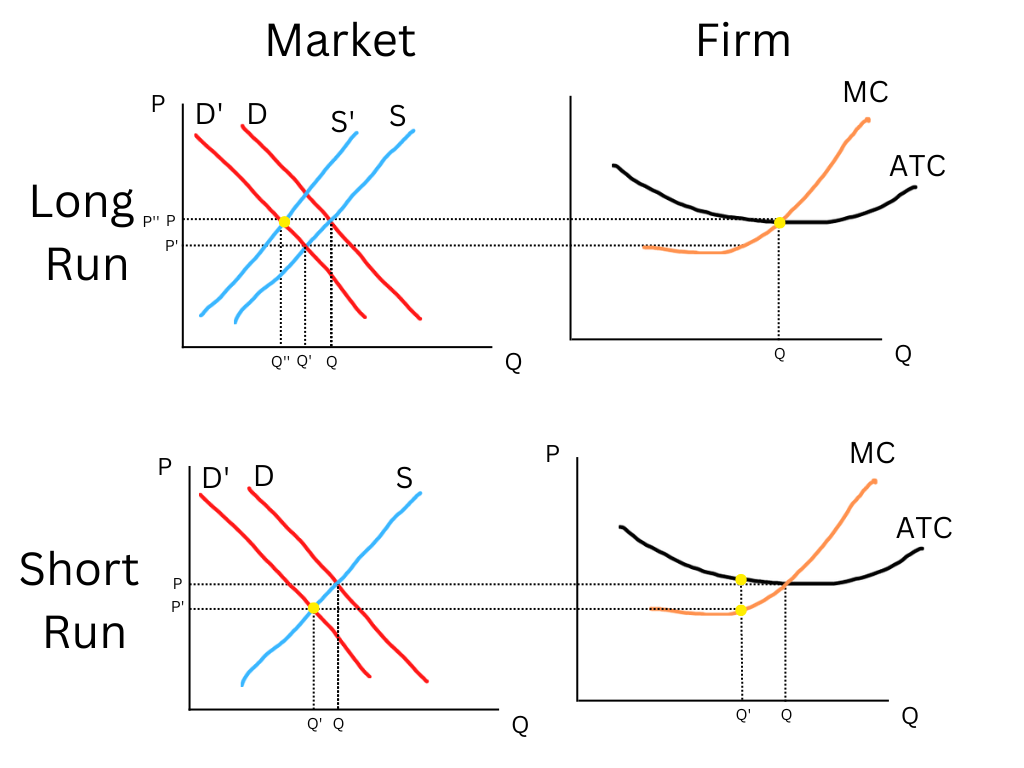
Credit: jonwlaw.medium.com
Frequently Asked Questions
What Is Short Run In Economics In Simple Terms?
The short run in economics refers to a period where some inputs are fixed, limiting production adjustments. Businesses can only change variable inputs, like labor or raw materials, while fixed inputs, such as capital or equipment, remain constant. This concept helps understand short-term business flexibility and constraints.
How To Determine Short Run Or Long Run Equilibrium?
Short run equilibrium occurs when marginal cost equals marginal revenue, considering fixed factors. Long run equilibrium happens when firms earn normal profit, with all factors variable, and no incentive to enter or exit the market.
What Does Long Run Equilibrium Mean In Economics?
Long run equilibrium in economics occurs when firms produce at minimum average cost, achieving zero economic profit. All resources are fully utilized, and market supply equals demand. Firms have adjusted all factors, ensuring stable prices and output levels, with no incentive to enter or exit the market.
What Is Short Run And Long Run In Economics With An Example?
The short run in economics refers to a period where at least one factor is fixed. In the long run, all factors become variable. For example, a bakery can increase production by hiring more workers in the short run, but needs a larger oven in the long run.
Conclusion
Short run equilibrium offers insight into economic stability. It helps understand market dynamics and pricing strategies. Businesses adjust production based on immediate demand. This ensures efficient resource allocation. Short run analysis also highlights potential for profit or loss. It’s essential for quick decision-making.
Understanding this concept aids in strategic planning. Economists study it to predict short-term market behavior. Grasping short run equilibrium boosts economic literacy. This knowledge supports informed financial decisions. In the fast-paced economy, every detail matters. Stay curious and keep exploring.