
Picture yourself standing on a soccer field, the crisp air energizing your senses. Your eyes scan the expanse, landing on the goal.
Have you ever wondered just what size a professional soccer goal really is? You’re not alone. Whether you’re a budding soccer enthusiast or someone keen to sharpen your sports knowledge, understanding the dimensions of a soccer goal can enhance your appreciation of the game.
You’ll discover the precise measurements that define a professional soccer goal. This isn’t just about numbers—it’s about uncovering the secrets behind the thrilling moments of the game you love. Imagine knowing exactly what it takes for a goalkeeper to defend that space or a striker to aim for glory. You’re about to dive into a world where every inch counts, and by the end, you’ll see the field through the eyes of a pro. Ready to kick off?
Standard Dimensions
Understanding the standard dimensions of a professional soccer goal is important. These measurements ensure fair play across all matches. Whether you’re setting up a field or just curious, knowing the exact size is useful. A professional soccer goal has specific dimensions that must be followed.
Height Of The Goal
The height of a professional soccer goal is 8 feet. This height is measured from the ground to the crossbar. All official matches use this standard height for consistency.
Width Of The Goal
The width of the goal is 24 feet. This distance spans from post to post. The wide opening challenges goalkeepers and players alike.
Depth Of The Goal
Goal depth varies, but it is usually around 5 feet. Depth provides stability and allows the net to hang freely. A deeper goal ensures the net does not touch the goalkeeper.
Material And Construction
Professional goals are made from strong materials. Commonly, they use metal or durable plastic. This ensures safety and longevity during intense games.
Net Specifications
The net must be securely attached to the posts. It should be strong enough to handle powerful shots. Netting material is typically nylon or polypropylene.
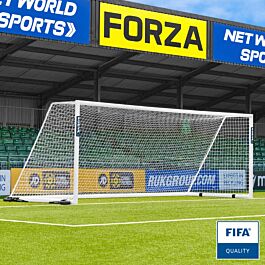
Credit: www.networldsports.com
History Of Soccer Goal Sizes
A professional soccer goal measures 24 feet wide and 8 feet high. These dimensions have been standardized since 1865, ensuring consistency in matches globally. Early versions varied greatly, but the modern regulation offers uniformity for competitive play.
The history of soccer goal sizes is a fascinating journey that reflects the evolution of soccer as a sport. It’s intriguing to consider how standardizing the size of a goal has impacted gameplay, strategy, and ultimately the global appeal of soccer. From the early days of the sport to the modern era, the dimensions of the goal have played a crucial role in shaping the rules and excitement of the game.Early Years And Varied Dimensions
In the early days of soccer, there was no standardized size for goals. Teams often used whatever was available, from tree branches to wooden posts. Imagine playing a game where the goal size varied from match to match! It was a chaotic time for players and fans alike, leading to inconsistent gameplay.Standardization Begins
As soccer gained popularity, the need for uniformity became evident. The Football Association in England took the first step in 1863 by setting the dimensions of the goal at 24 feet wide and 8 feet high. This decision marked the beginning of consistency in soccer rules, allowing for fairer play and better competition.Impact On Strategy And Gameplay
With standardized goal sizes, teams could develop more strategic plays and defensive tactics. Predictability in goal dimensions led to more thrilling matches, as players could hone their skills knowing the exact size of the target they were aiming for. You might wonder how different soccer would be today if the size of the goal was still up for debate!Modern Adjustments And Innovations
Although the standard goal size has remained largely unchanged, innovations in technology and materials have enhanced the durability and visibility of goals. Modern goals are designed to withstand intense gameplay and are often equipped with cameras for better goal-line technology. How will these innovations continue to evolve soccer in the future? This historical journey underscores the importance of standardization in sports. It not only levels the playing field but also enriches the experience for players and fans worldwide.Materials And Construction
A professional soccer goal measures 24 feet wide and 8 feet high. These dimensions create a challenging target for players. The frame is typically made from durable materials like aluminum or steel.
Professional soccer goals are built with precision and durability. The materials used ensure they withstand intense gameplay. Each component plays a crucial role in the goal’s performance. From the frame to the net, construction quality is key. Let’s explore the essential elements of a soccer goal’s materials and construction.Frame Materials
The frame of a soccer goal is usually made from steel or aluminum. Steel offers strength and durability, making it ideal for high-impact play. Aluminum is lighter, yet strong, often used for portable goals. Both materials resist corrosion, ensuring longevity.Net Composition
Soccer goal nets are commonly made from polyethylene or nylon. Polyethylene is economical and weather-resistant, suitable for all conditions. Nylon nets provide extra strength, perfect for professional use. The netting is secured tightly to the frame, preventing sagging during matches.Fastening And Stability
Goals are anchored firmly to the ground for stability. Anchors or pegs are used on grass fields to keep goals in place. On artificial turf, weighted bases or ground screws ensure the goal remains stationary. Proper fastening prevents movement during intense plays.Weather Resistance
Materials are selected for their ability to withstand weather changes. Steel and aluminum frames resist rust and corrosion. Nets are treated for UV protection, preventing wear from sun exposure. This ensures the goal remains functional year-round, regardless of weather conditions.Safety Features
Safety is a priority in goal construction. Rounded edges on frames reduce injury risks during play. Nets are securely fastened, preventing entanglement of players. These features ensure a safe environment for all athletes.Regulations And Compliance
Regulations and compliance ensure that professional soccer goals meet specific standards. These standards guarantee fair play and safety for players. Soccer’s governing bodies set these rules, making sure goals are consistent worldwide. Understanding these regulations helps appreciate the sport’s meticulous nature and uniformity.
Fifa Standards
FIFA sets the global standard for professional soccer goals. According to FIFA, a regulation goal measures 24 feet wide and 8 feet high. This size ensures uniformity across international matches. The posts and crossbar must be white and made of approved materials. FIFA standards are crucial for maintaining consistency in professional soccer.
Regional Variations
While FIFA sets the global benchmark, some regions have slight variations. Local leagues may adjust goal sizes based on specific needs. For instance, youth leagues might use smaller goals for junior players. These adaptations help accommodate different skill levels and age groups. Despite these variations, professional matches adhere to FIFA’s standards.
Impact On Gameplay
Professional soccer goals measure 24 feet wide and 8 feet high. This standard size impacts gameplay by challenging goalkeepers and demanding precise shots from players. The dimensions influence strategies, with teams aiming to exploit space for scoring opportunities.
The size of a professional soccer goal is more than just a measurement—it’s a crucial element that shapes the dynamics of the game. The standard dimensions of 8 feet in height and 24 feet in width create a challenging target for players. It influences strategies, player positioning, and even the psychological aspects of the game.Goalkeeper’s Challenge
The large size of the goal means goalkeepers must cover a significant area. This challenges their agility and decision-making. Quick reflexes and smart positioning become vital, as one misstep can lead to a conceded goal.Attacking Strategies
For attackers, the goal’s size opens up numerous scoring opportunities. Players must learn to capitalize on the large target by practicing precision and power. Teams often devise creative plays to exploit any weaknesses in the goalkeeper’s coverage of such a vast goal.Defensive Tactics
Defenders must adjust their tactics to protect the expansive goal area. This often involves coordinating as a unit to close down spaces and block shots. Effective communication and organization are key to reducing scoring chances for the opposition.Psychological Impact
The goal’s size can also influence a player’s mindset. For goalkeepers, it can be intimidating, knowing there’s so much space to guard. Conversely, attackers might feel empowered, seeing a wide-open target to aim for.Training And Skill Development
Players often train specifically to handle the challenges posed by the goal’s dimensions. Goalkeepers work on diving and reach, while attackers practice shooting accuracy. Coaches emphasize drills that simulate real-game scenarios, ensuring players are well-prepared.Game Outcome
Ultimately, the goal size has a direct impact on match results. A well-placed shot can be the difference between a win and a loss. Understanding how to maneuver around the goal can give teams a competitive edge. Have you ever considered how a small change in goal size might alter the gameplay? Reflecting on this can deepen your appreciation for the sport’s intricacies.
Credit: www.amazon.com
Goal Size In Youth Soccer
Goal size in youth soccer varies significantly from professional standards, primarily to accommodate the physical and developmental needs of young players. This ensures that the game remains enjoyable, safe, and appropriately challenging. Understanding the right goal size for different age groups is crucial for fostering skill development and maintaining enthusiasm for the sport.
Age Group Specific Sizes
In youth soccer, goal sizes are adjusted based on age groups to ensure that the game is suitable for young players. For instance, children under the age of 8 often play with goals that are about 4 feet high and 6 feet wide. As players grow older, the goal sizes increase incrementally, reaching approximately 6.5 feet by 18.5 feet for those aged 12 to 13.
These tailored sizes not only make the game fairer but also help young players develop their skills effectively. Imagine trying to score in a full-sized professional goal as a seven-year-old—daunting, right? The gradual increase in goal size helps players build confidence and improve their technique as they advance through age groups.
Developmental Considerations
Adjusting goal sizes for youth soccer is not just about scaling the game to fit smaller players. It also considers the developmental stages of children, promoting better engagement and learning. Smaller goals for younger players encourage teamwork and strategic thinking, as scoring becomes a collective effort rather than an individual task.
As children grow and their skills mature, larger goals introduce new challenges that keep them engaged and motivated. This progression helps maintain interest in the sport and encourages continuous improvement. Have you ever noticed how a well-matched challenge keeps kids coming back for more?
Ensuring the right goal size is an essential part of nurturing young talent and promoting a lifelong love of soccer. Whether you’re a coach, parent, or league organizer, knowing these sizes can make a significant difference in a child’s soccer experience.
Technological Innovations
In the modern world of soccer, technology plays a key role. It enhances precision and fairness on the field. Technological innovations in professional soccer goals have transformed the game. These advancements ensure more accurate decisions and better gameplay.
Goal-line Technology
Goal-line technology determines if the ball crosses the line. It uses cameras or sensors for precise detection. This technology helps referees make accurate calls. Fans and players appreciate its reliability in crucial moments. It reduces disputes over goal decisions.
Smart Goals
Smart goals include sensors and cameras embedded in the posts. These features track ball movement and player interactions. Data collected assists coaches in strategy planning. Smart goals enhance training by providing valuable insights. They contribute to fair play and improved performance.
Maintenance And Safety
Professional soccer goals measure 8 feet high and 24 feet wide. Regular maintenance ensures player safety during matches.
Maintaining and ensuring the safety of a professional soccer goal is as important as knowing its size. The standard size of a soccer goal may be universally recognized, but the safety measures and maintenance practices can vary. These aspects ensure not only the longevity of the equipment but also the safety of the players.Routine Inspections
Regular inspections are crucial for the maintenance of soccer goals. Checking the stability of the goalposts and ensuring they are anchored securely can prevent accidents. You should also look for any signs of wear and tear on the netting and framework, addressing these issues promptly to avoid more significant problems later. In my experience, a simple checklist can be invaluable. Consider items like ensuring no rust on the posts, verifying the net is intact, and confirming the ground anchors are solid. By dedicating a few minutes before each game, you can enhance player safety and extend the life of your equipment.Safety Features
Safety features are not just add-ons but essentials that should be part of every soccer goal. Modern goals often come with ground anchors or counterweights to prevent tipping. These features are vital, especially in environments with young players who might lean or hang on the goalposts. Additionally, you might consider padded coverings for the posts, which can significantly reduce injury risks during high-intensity games. Reflect on whether your current goals have these features or if an upgrade might be necessary. Investing in these safety measures not only protects players but also gives peace of mind to coaches and organizers.Buying Guide For Teams
Choosing the right professional soccer goal for your team can be a crucial decision that impacts your players’ performance and safety. Whether you’re managing a local club or an aspiring academy, understanding what to look for can make all the difference. Let’s dive into some key considerations to guide your purchase.
Budget Considerations
Your budget is often the first thing to assess when buying a soccer goal. While it’s tempting to go for the cheapest option, consider the long-term value. Investing in a high-quality goal might save your team from frequent replacements and repairs.
- Assess your team’s financial resources and prioritize your spending.
- Research and compare prices from different suppliers.
- Consider additional costs like shipping and installation.
Have you ever bought something cheap only to regret it later? This can happen with soccer goals if you don’t plan wisely.
Quality And Durability
The quality and durability of a soccer goal are paramount. You want a structure that can withstand intense matches and rough weather conditions. Look for goals made from robust materials, such as aluminum or steel, that offer longevity.
- Check for anti-rust coatings or weather-resistant features.
- Opt for goals with reinforced corners and stable bases.
- Read reviews from other teams to gauge reliability.
Imagine the frustration of a goal collapsing during a crucial game. Ensuring quality can prevent such mishaps and maintain team morale.
Ultimately, choosing the right soccer goal involves balancing cost with quality. Are you ready to invest in your team’s future by making informed choices?

Credit: www.amazon.com
Frequently Asked Questions
What’s The Official Size For A Soccer Goal?
The official size for a soccer goal is 24 feet wide and 8 feet high. These dimensions are regulated by FIFA. Soccer goals must meet these standards for professional matches. Ensure your goal meets these size requirements for official play.
What Size Goal Does The Premier League Use?
The Premier League uses goals that measure 8 feet in height and 24 feet in width. These dimensions are standard for professional football matches.
What Is The Size Of A Fifa Goal?
A FIFA goal measures 24 feet wide and 8 feet high. It is used in professional football matches worldwide. The goalposts and crossbar are made of approved materials. Ensure the net is secured properly to avoid interference with play. These dimensions comply with FIFA regulations for international games.
How Big Is A Professional Size Football Goal?
A professional football goal measures 24 feet wide and 8 feet high. These dimensions are standard for adult matches. The goal depth can vary but typically ranges from 4 to 10 feet. Properly understanding these dimensions ensures compliance with international football standards.
Conclusion
Understanding soccer goal dimensions is essential for players. Standard goals measure 24 feet by 8 feet. This size is used in professional matches worldwide. Knowing this helps players and coaches train effectively. It ensures that practice sessions mimic real game scenarios.
Accurate goal sizes also improve fairness in competitions. For fans, this knowledge enhances appreciation of the sport. It deepens understanding of game dynamics and strategies. Whether playing or watching, goal size impacts the experience. So, next time you watch a match, you’ll know the importance of those goalposts.