
Choosing the right kettlebell weight can feel like a puzzle. You’re ready to dive into kettlebell workouts, but how do you know which weight is perfect for you?
Picking the wrong one can lead to frustrating workouts or even injuries. You want to feel strong, confident, and see real results from your efforts. This guide is here to help you make an informed decision so you can get the most out of your kettlebell training.
Discover the factors that matter most when choosing your kettlebell, and ensure your fitness journey starts off on the right foot. Keep reading to unlock the secrets to choosing the ideal kettlebell weight that matches your unique fitness goals and experience level.

Credit: www.youtube.com
Kettlebell Basics
Kettlebell training has gained popularity due to its dynamic and versatile nature. Whether you’re a fitness newbie or a seasoned athlete, understanding the basics of kettlebells can elevate your workout routine. But how do you decide which kettlebell weight is right for you? Let’s explore the fundamentals to help you make an informed choice.
What Are Kettlebells?
Kettlebells are round weights with a flat base and a handle on top. They originated in Russia and have been used in strength training for centuries. Unlike dumbbells, their unique design allows for fluid, swinging movements.
These weights come in various sizes, typically measured in kilograms. Beginners might start with lighter weights, while advanced users may opt for heavier options. The key is finding the right balance that challenges you without compromising form.
Benefits Of Kettlebell Training
Why choose kettlebells over other weights? For starters, they offer a full-body workout. Every movement engages multiple muscle groups, boosting strength and endurance. This efficiency is perfect for those with limited time.
Kettlebells also improve your cardiovascular fitness. A quick session can elevate your heart rate, burning calories and improving stamina. Plus, the dynamic exercises enhance flexibility and coordination, reducing injury risk.
Have you noticed how kettlebell workouts can be done almost anywhere? Their compact design makes them ideal for home gyms or outdoor sessions. And with so many exercises to try, boredom is never an issue.
Choosing the right kettlebell weight is crucial. Think about your fitness goals and current strength level. Are you aiming to build muscle, enhance endurance, or just mix up your routine?
Consider starting light to perfect your form. Gradually increase the weight as you gain confidence and strength. Remember, it’s not about lifting the heaviest kettlebell but about consistent progress and safe training.
Choosing The Right Weight
Choosing the right kettlebell weight is crucial for effective training and avoiding injury. Whether you’re a beginner or seasoned athlete, selecting the appropriate weight can make all the difference in your workout experience. Let’s dive into some key considerations to ensure you pick the perfect kettlebell for your fitness journey.
Factors To Consider
Several factors influence the ideal kettlebell weight for you. Your current fitness level plays a significant role—are you a beginner or advanced? Beginners might start with lighter weights to learn proper technique, while more experienced individuals may opt for heavier options to increase strength.
Assess your goals. Are you focusing on strength, endurance, or flexibility? Strength-building exercises typically require heavier weights, whereas endurance workouts benefit from lighter ones. Remember, your goals guide your weight choice.
Consider your workout routine. If your plan includes high repetitions, lighter weights prevent fatigue and maintain form. Conversely, for low reps and high intensity, a heavier kettlebell might be your best bet.
Common Mistakes To Avoid
A common mistake is choosing a kettlebell that’s too heavy. It’s tempting to go big, but improper form leads to injuries. Prioritize technique over weight. You can always increase the weight as you master your movements.
Avoid neglecting your body’s feedback. If you feel excessive strain or discomfort, it might be time to reassess your weight choice. Listen to your body and adjust accordingly.
Lastly, don’t forget to challenge yourself. Sticking with the same weight for too long stalls progress. Gradually increase the weight to keep pushing your limits and advancing your fitness level.
So, what kettlebell weight will you choose to take your workouts to the next level?
Assessing Your Fitness Level
Choosing the right kettlebell weight depends on your current strength and fitness level. Beginners might start with a lighter kettlebell, around 8-12 kilograms. Experienced lifters can opt for heavier weights to increase their workout intensity.
Assessing Your Fitness Level Understanding your fitness level is crucial in choosing the right kettlebell weight. You want to challenge your muscles without risking injury. It’s like finding a balance between pushing your limits and maintaining control. The key is to evaluate your current strength and experience. Think about your workout routines and how your body responds to weightlifting. Are you just starting out, or have you been working out for years? Consider your goals too. Are you aiming for muscle endurance, strength, or just overall fitness? Your objectives will influence the weight you select.Beginner Guidelines
If you’re new to kettlebell training, start light. A weight between 8kg and 12kg often works well for beginners. Focus on mastering form and technique. Proper form builds a solid foundation and prevents injuries. Try movements like swings and squats initially. These exercises are excellent for building strength and confidence.Intermediate Recommendations
For those with some experience, a weight range of 12kg to 16kg can provide a healthy challenge. Increase the complexity of exercises. Incorporate moves like cleans and presses. Pay attention to your body’s feedback. If you’re struggling to maintain form, consider adjusting the weight.Advanced Options
Experienced individuals can explore weights above 16kg. Experiment with advanced techniques. You might try snatches or Turkish get-ups. Challenge your limits, but prioritize safety. It’s crucial to maintain control and prevent overexertion.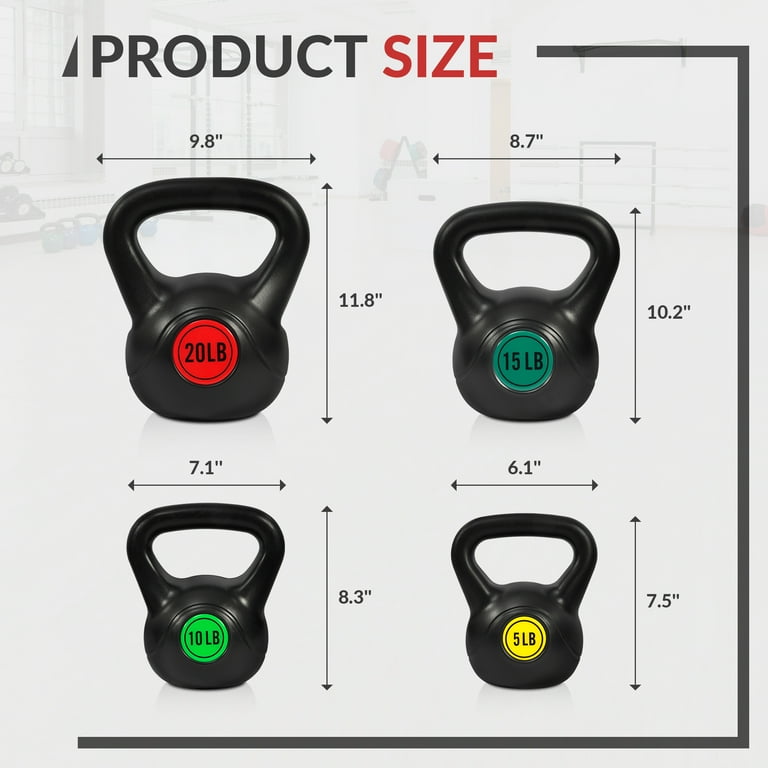
Credit: www.walmart.com
Types Of Kettlebell Exercises
Kettlebell exercises offer a versatile way to improve fitness. These exercises target different muscle groups and enhance various aspects of physical health. From building strength to boosting cardio, kettlebells can do it all. Here’s a look at how kettlebells can be used across different exercise types.
Strength Training
Kettlebells are excellent for building strength. They engage multiple muscle groups at once. This makes them ideal for compound movements. Exercises like the kettlebell swing, squat, and deadlift are popular. These exercises build core and lower body strength. They also improve grip and forearm strength. Start with a weight you can control. Then gradually increase as your strength improves.
Cardio Workouts
Kettlebells can also enhance cardio fitness. They provide a unique way to increase heart rate. High-intensity interval training (HIIT) with kettlebells is effective. It combines short bursts of intense exercise with rest. This method burns calories and improves cardiovascular health. Kettlebell swings and snatches are great for cardio. These exercises keep your heart rate up and help burn fat.
Flexibility And Mobility
Kettlebells can improve flexibility and mobility too. Dynamic movements with kettlebells enhance joint range of motion. The Turkish get-up is a key exercise for this. It improves shoulder stability and core strength. Windmills and halos also increase flexibility. These exercises stretch the shoulders, hips, and spine. Consistent practice with kettlebells can lead to better mobility.
Trying Before You Buy
Selecting the right kettlebell weight is crucial for effective workouts. Trying different weights helps find the perfect fit for your strength level. Testing before purchasing ensures safety and enhances your fitness journey.
Trying before you buy is a crucial step in choosing the right kettlebell for your fitness journey. It’s easy to get swayed by online reviews or trendy recommendations, but hands-on experience can be a game-changer. This section will guide you on how to test kettlebells effectively before making a purchase, ensuring you invest in equipment that truly meets your needs.Test Runs At The Gym
Consider visiting a local gym to try different kettlebell weights. Gyms often have a variety of options, allowing you to experiment with different sizes without commitment. While there, perform basic exercises like swings and squats to gauge how each weight feels. Pay attention to your form and comfort during these tests. Does the kettlebell feel manageable, or are you struggling to maintain control? Engage with gym staff or other members for their insights. They might offer valuable advice based on their own experiences.Consulting A Trainer
Seeking guidance from a professional trainer can provide clarity. Trainers can assess your current strength level and recommend an appropriate kettlebell weight. They can demonstrate proper techniques and help you understand the nuances of handling different weights. Ask questions about progression—how to safely increase weight as you grow stronger. A trainer’s expertise can prevent common mistakes, ensuring your workouts are both safe and effective. What do you aim to achieve with your kettlebell workouts? Sharing your goals with a trainer can lead to personalized recommendations tailored to your ambitions.Safety Tips
Choosing the right kettlebell weight is crucial for safe workouts. Start with a lighter kettlebell, around 8-12 kg, if you’re a beginner. Gradually increase as your strength and technique improve.
When deciding on the right kettlebell weight, safety should be your top priority. Choosing a kettlebell that’s too heavy can lead to injuries and derail your fitness goals. By focusing on safety tips, you can enjoy the benefits of kettlebell workouts while minimizing risks. Let’s delve into proper form and technique, as well as avoiding injury.Proper Form And Technique
Maintaining proper form is crucial when using kettlebells. Before you even pick up a kettlebell, ensure your posture is correct. Stand with your feet shoulder-width apart and keep your back straight. Engage your core to stabilize your body and prevent strain. Start with basic movements like swings or squats, and prioritize form over speed. If you’re unsure about your technique, consider taking a class or watching instructional videos. A small tweak can make a big difference in preventing injuries.Avoiding Injury
Avoiding injury starts with listening to your body. If you feel pain, stop immediately. Gradually increase the weight as you become more comfortable with the exercises. Using a weight that’s too heavy can lead to improper form, increasing the risk of injury. Remember, it’s better to start light and work your way up than to push through pain. Consider using a mirror to check your alignment during exercises. This simple act can help identify and correct any form issues before they become problematic. Lastly, warm up before starting your kettlebell routine and cool down afterward. These steps prepare your muscles and reduce the risk of strains and sprains. What steps will you take to ensure your kettlebell workouts are safe and effective?Tracking Progress
Choosing the right kettlebell weight involves assessing your fitness level and goals. Beginners might start with lighter weights, around 8-12 kg, while more experienced lifters can opt for heavier options. Pay attention to your form and comfort to ensure effective progress and safety.
Tracking your progress is essential when determining the right kettlebell weight. It ensures that you’re not only moving forward but also making informed decisions about when to increase the weight. Understanding how to set goals and measure improvement can enhance your kettlebell journey significantly.Setting Goals
Start by establishing clear and achievable goals. Do you want to build muscle, improve endurance, or boost overall fitness? Write down your objectives. Keep them visible to remind yourself why you started. Consider both short-term and long-term goals. Short-term goals could include mastering a specific kettlebell movement, while long-term goals might involve increasing your kettlebell weight by a certain percentage over several months.Measuring Improvement
Track your workouts consistently. Maintain a log to record the weight used, the number of reps, and sets completed. Noticeable improvements can be subtle. They might include smoother form, increased stamina, or reduced recovery time. Ask yourself if the kettlebell feels lighter or if your energy levels remain high throughout the session. These are positive indicators of progress. Remember, progress isn’t always about lifting heavier weights. It could also mean improved technique or greater confidence in your movements. Challenge yourself regularly. When your current kettlebell feels too easy, it’s time to consider moving up in weight. But ensure you’re ready to maintain proper form with the heavier kettlebell. Tracking progress not only keeps you motivated but also provides a clear pathway to achieving your fitness goals. Are you ready to take the next step in your kettlebell journey?
Credit: www.kettlebellkings.com
Frequently Asked Questions
How Heavy Should You Go With Kettlebells?
Choose a kettlebell weight that allows you to complete exercises with good form. Beginners usually start with 8-12 kg (18-26 lbs). Intermediate lifters might opt for 12-16 kg (26-35 lbs). Advanced users can go for 16-24 kg (35-53 lbs). Always prioritize technique over weight.
Is A 50 Lb Kettlebell Too Heavy?
A 50 lb kettlebell may be too heavy for beginners or those with limited strength. Choose a weight suitable for your fitness level. Gradually increase as you build strength and confidence. Consult a trainer if unsure about the appropriate weight for your workout routine.
Safety and proper form are crucial.
Is A 30 Lbs Kettlebell Good?
A 30 lbs kettlebell suits intermediate users for strength and endurance training. Beginners might find it heavy. It’s ideal for exercises like swings, goblet squats, and lunges. Always maintain proper form to prevent injuries.
How Heavy Is Joe Rogan’s Kettlebell?
Joe Rogan’s kettlebell weighs 70 pounds. He frequently uses it during his workouts for strength training. This weight is ideal for building muscle and enhancing endurance. Many fitness enthusiasts admire his dedication to kettlebell exercises.
Conclusion
Choosing the right kettlebell weight boosts your workout success. Start light if you’re new. Gradually increase as you get stronger. Listen to your body’s signals. Avoid pain or injury. Practice safe techniques. Consistency is key for progress. Seek advice from trainers if unsure.
Enjoy your fitness journey. Your commitment leads to results. Feel confident with your choice. Remember, every step counts. Patience pays off. Stay motivated and keep moving forward. Fitness is a journey, not a race. Your goals are within reach. Take it one lift at a time.
Happy lifting!