
Choosing the right size punching bag can feel like a daunting task, especially with so many options available. You might be asking yourself, “What size of punching bag should I get?”
Whether you’re a seasoned boxer or a beginner just stepping into the ring, finding the perfect punching bag is crucial for optimizing your workout and enhancing your skills. The right bag can make a difference in your strength, technique, and overall enjoyment.
Dive into this guide to discover how to select the ideal punching bag size tailored just for you. Your fitness journey deserves the best start, and we’re here to help you find it. Keep reading to transform your training routine with the perfect punching bag.

Credit: throwdown.com
Types Of Punching Bags
Choosing the right punching bag size depends on your training goals. Lighter bags are ideal for speed and precision. Heavier bags offer resistance for strength and power. Consider your skill level and space before deciding.
Choosing the right punching bag can be a game-changer for your training routine. The type of bag you select should match your fitness goals, space constraints, and personal preferences. Let’s dive into the different types of punching bags to help you make an informed decision.Heavy Bags
Heavy bags are the most common choice for boxers and martial artists. They are typically filled with sand or fabric and weigh between 70 to 150 pounds. A heavy bag is ideal for building strength and endurance. It allows you to practice powerful punches and kicks. Consider your ceiling’s strength and the available space, as these bags require solid support and ample room for movement.Speed Bags
Speed bags are perfect for improving hand-eye coordination and speed. These smaller, air-filled bags rebound quickly, challenging your timing and rhythm. Speed bags are often hung at eye level and require a sturdy platform. If you want to sharpen your reflexes and enhance your agility, a speed bag might be the right choice. Plus, they take up less space, making them suitable for smaller training areas.Freestanding Bags
Freestanding bags are a versatile option if you have limited space or prefer not to mount a bag. These bags stand on a weighted base, often filled with water or sand. They’re easy to move, allowing you to train anywhere. Freestanding bags are great for practicing kicks and punches without the need for ceiling support. However, ensure the base is stable enough to withstand your strikes.Double-end Bags
Double-end bags are designed to hone your precision and timing. Suspended between the floor and ceiling with elastic cables, these bags move unpredictably, simulating real fight conditions. They’re excellent for practicing dodging and counter-punching. If you’re looking to improve your accuracy and defensive skills, a double-end bag is a valuable addition to your training arsenal. Each type of punching bag offers unique benefits. What do you aim to achieve in your workouts? Whether it’s power, speed, or precision, selecting the right bag can elevate your training experience.Factors To Consider
Choosing the right punching bag size depends on your training goals and space. Consider your weight, skill level, and available room. A heavier bag offers stability, while a lighter one provides speed training.
Factors to Consider Choosing the right punching bag is crucial for effective training. Many factors come into play when deciding on the perfect size. Your experience level, training goals, available space, and budget are key considerations. Each factor influences the type of bag that suits your needs best.User Experience Level
Your experience level matters. Beginners might prefer lighter bags. They are easier to manage and provide a gentle introduction to boxing. Experienced boxers often opt for heavier bags. These offer more resistance and challenge. If you’re unsure, try different bags to find a comfortable weight.Training Goals
Define your training goals clearly. Are you focusing on speed, power, or endurance? Speed bags are great for fast punches. Heavy bags build strength and power. If versatility is your goal, consider a multi-functional bag. Each type targets different skills, enhancing your workout.Space Availability
Space is a critical factor. Measure your training area before purchasing a bag. Large bags need more room. Compact spaces suit smaller bags or wall-mounted options. Ensure there’s enough clearance for safe movement. Consider ceiling height, too, especially with hanging bags.Budget Constraints
Budgets vary. Set a clear spending limit. Quality bags can be expensive but last longer. Cheaper options might wear out quickly. Look for deals or second-hand options. Compare prices online and in stores. Balance cost with durability for the best value. By considering these factors, you can select a punching bag that fits your training style and needs.Weight And Size Guidelines
Choosing the right punching bag size can significantly impact your training experience. Whether you’re a beginner or an experienced fighter, understanding the weight and size guidelines can help you make an informed decision. Let’s explore the various options to find the perfect match for your needs.
Heavy Bag Weights
Heavy bags are the cornerstone of any serious boxing or martial arts training. The general rule is to pick a heavy bag that’s about half your weight. So, if you weigh 160 pounds, a bag around 80 pounds is ideal.
Consider your training goals. A lighter bag swings more and helps improve coordination and footwork, while a heavier bag offers resistance for building strength and power. Think about what you want to achieve when deciding on the weight.
Speed Bag Sizes
Speed bags are excellent for enhancing hand-eye coordination and speed. They come in various sizes, typically ranging from 10×7 inches to 5×8 inches. A smaller bag is faster and more challenging, perfect for advanced users.
Beginners might prefer a larger speed bag, as it moves slower and provides a bigger target. Test different sizes if possible, to see which one feels comfortable and suits your skill level.
Freestanding Bag Dimensions
Freestanding bags are versatile and convenient, often used in smaller spaces or home gyms. They vary in height, usually adjustable between 5 to 6 feet. Consider the space you have and your height when choosing a freestanding bag.
Some models come with a base that can be filled with water or sand for stability. Ensure the base is sturdy enough to withstand your punches and kicks. Check if you have enough room for bag movement and your footwork.
Now that you have an understanding of the different bag sizes, which one aligns with your training goals? Making the right choice can transform your workouts and elevate your skills.
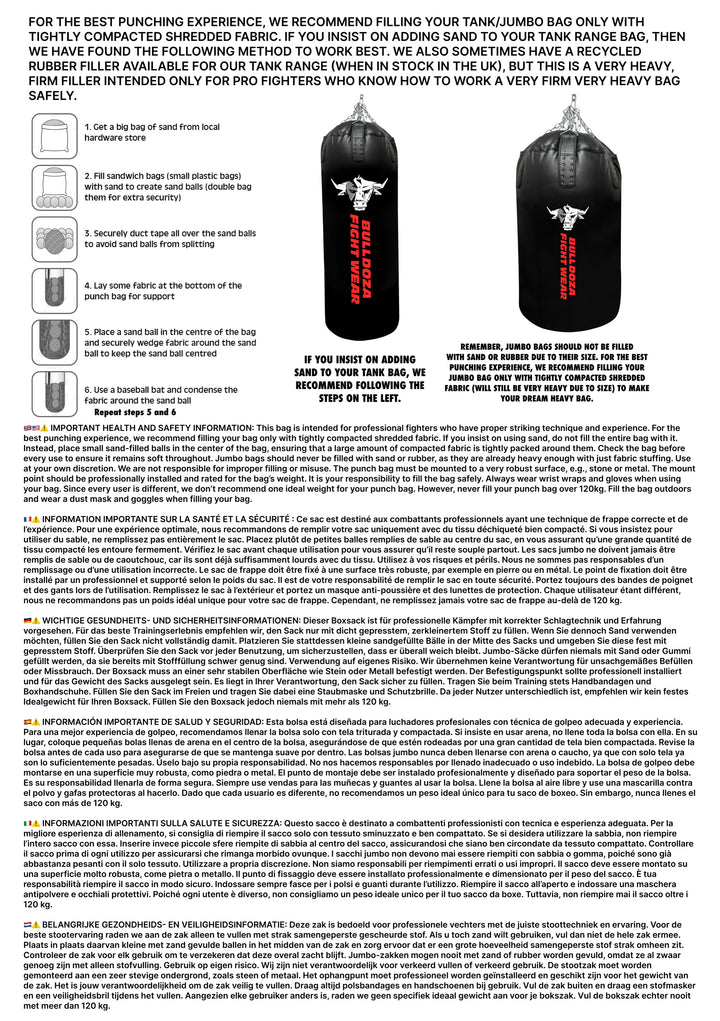
Credit: bulldozafightwear.co.uk
Materials And Durability
Choosing the right punching bag involves considering its materials and durability. These factors ensure your bag withstands intense workouts and lasts longer. Understanding the differences in materials and fillings can help you make the best choice.
Leather Vs. Synthetic
Leather punching bags are known for their premium quality. They offer a natural feel and are highly durable. Leather’s toughness makes it a favorite for heavy hitters. It withstands harsh conditions and offers a long lifespan. Synthetic materials, on the other hand, are more affordable. They mimic leather’s texture and are easier to maintain. They are resistant to moisture, making them ideal for humid environments. Both options offer unique benefits depending on your needs.
Filling Types
Punching bags come with various filling types. Sand-filled bags are heavy and provide resistance. They are suitable for strength training and enhancing power. Foam-filled bags offer a softer surface. They are less dense and perfect for beginners. They help in improving accuracy and technique. Water-filled bags offer versatility and easy adjustment. You can modify their weight by adding or removing water. Choose a filling type that matches your training goals.
Durability Considerations
Durability depends on both material and construction quality. Leather bags often have reinforced stitching. This ensures they withstand repeated impacts. Synthetic bags may use multi-layer designs. These offer added strength and longevity. Consider the bag’s use environment. Indoor bags face less wear than outdoor ones. Regular maintenance increases lifespan. Clean and inspect your bag often to ensure it remains in peak condition.
Mounting Options
Choosing the right size punching bag involves deciding on mounting options. Each method offers unique benefits. Consider your space, training style, and installation preferences. Here, we explore three popular mounting options.
Ceiling Mount
A ceiling mount saves floor space. It provides 360-degree access for varied workouts. Ensure your ceiling is strong enough to hold the weight. Use a sturdy beam or joist for installation. This option suits those with limited floor area. It allows for full-circle movement around the bag.
Wall Mount
Wall mounts are great for those with limited ceiling strength. They keep the bag stable, reducing sway. This option needs a solid wall for installation. It limits movement slightly but offers a strong foundation. Ideal for compact spaces and focused training sessions.
Stand Mount
Stand mounts are perfect for flexible setups. They require no drilling or permanent fixtures. Easy to move, they suit changing workout spaces. Ensure the stand is stable and weighted properly. This option is versatile and portable. Perfect for home gyms or shared spaces.
Credit: boxingathome.medium.com
Maintenance Tips
Taking care of your punching bag is crucial to ensure its longevity and performance. Proper maintenance can make a significant difference in the life of your equipment. It’s not just about buying the right size; it’s also about keeping it in top shape. Let’s dive into some essential maintenance tips.
Cleaning And Care
Regular cleaning is a must. Sweat and dust can accumulate on the bag, leading to unpleasant odors and potential damage. A simple wipe down with a damp cloth after each session can keep it fresh. For deeper cleaning, consider using mild soap and water occasionally. Avoid harsh chemicals as they can deteriorate the material.
Inspecting For Damage
Inspect your bag regularly for signs of wear and tear. Look for any tears or loose stitching, as these can worsen over time. A quick check after every workout can help you catch problems early. Addressing minor issues promptly can prevent major repairs down the line. Have you noticed any unusual sounds or movements when hitting the bag?
Replacing Components
Sometimes, parts of your punching bag may need replacement, like straps or chains. If you find any components that are worn out, replace them immediately to maintain safety. Also, consider upgrading parts for better durability. Keeping an eye on these small details can make all the difference in your training experience.
Frequently Asked Questions
How Do You Know What Size Punching Bag To Get?
Choose a punching bag based on your weight and training goals. For beginners, a bag weighing half your body weight is ideal. Heavy bags suit power training, while lighter bags improve speed and technique. Consider space and ceiling height for hanging.
Always prioritize personal comfort and training needs.
Should I Get A 4ft Or 5ft Punch Bag?
Choose a 4ft punch bag for limited space and beginner training. Opt for a 5ft bag for advanced workouts and taller users. Consider available space, your height, and training intensity when deciding. Both sizes offer great workout benefits.
Is An 80lb Punching Bag Good?
An 80lb punching bag suits beginners and lightweights. It provides good resistance for basic training. Ensure it’s hung securely for safety. Ideal for those aiming to improve speed and technique. Check space availability before purchase. It’s a good starting point for most home gyms.
What Height Punching Bag Should I Get?
Choose a punching bag based on your height and training type. For adults, a 4-5 foot bag suits most. Taller bags are ideal for kickboxing, while shorter ones are great for boxing. Ensure the bag’s weight matches your strength and skill level for optimal training results.
Conclusion
Choosing the right punching bag size is vital for effective training. Consider your goals and space. A heavier bag offers more resistance. A lighter bag enhances speed work. Check your room size before buying. Match the bag to your skill level.
Beginners might prefer lighter bags. Experienced boxers often choose heavier ones. The right size improves your technique and safety. Always prioritize quality and durability. With the right bag, your training will be more productive. Enjoy your workouts and progress steadily.