
Have you ever wondered what’s inside a tennis ball? It’s more than just a fuzzy, yellow sphere bouncing across the court.
You might be surprised to learn that the secret to its bounce lies in its unique construction. Imagine holding a tennis ball in your hand, feeling its texture, and hearing the satisfying sound it makes when it hits the ground.
The mystery of what lies beneath its surface is intriguing, isn’t it? Understanding the inner workings of a tennis ball could change the way you see your favorite sport. Discover how the combination of materials inside this little ball impacts your game and why it plays such a vital role in tennis. Stick around, and you might find yourself appreciating every serve and volley a little bit more.
Core Components
Inside a tennis ball, you’ll find a rubber core that provides bounce. This core is surrounded by a layer of felt, offering grip and control during play.
Understanding the core components of a tennis ball gives you a new appreciation for this simple yet fascinating object. Each component plays a vital role in its performance, durability, and the unique bounce that every tennis player relies on. From the outer layer to the hidden core, every part is meticulously designed to serve its purpose on the court. Curious about what makes up a tennis ball? Let’s dive into the core components.Rubber Core
The heart of the tennis ball is its rubber core. It is crafted from a blend of rubber compounds, designed to provide the perfect bounce. This core is pressurized, creating the elasticity needed for a lively bounce. Imagine the sensation of hitting a ball and feeling the energy return as it springs off your racket. This is the magic of the rubber core. Inside the rubber core, pressurized air is the secret behind the ball’s bounce. This pressure is carefully calibrated to ensure consistent performance. It affects how high the ball bounces and how fast it travels. Ever wondered why a new tennis ball feels more lively than an older one? The difference lies in the pressure within. The outer layer, the felt covering, is what you see and feel when holding a tennis ball. Made from a blend of wool and nylon, this felt is crucial for grip and spin. It interacts with the strings of your racket and the surface of the court, dictating how the ball moves. Have you noticed how a ball grips the ground as it spins across the court? That’s the felt at work.Adhesive Layer
Between the rubber core and felt covering lies the adhesive layer. It bonds the felt to the core, ensuring the ball remains intact even after numerous hits. Without this adhesive, the felt would peel away, impacting the ball’s performance. It’s a silent guardian, holding everything together. Each component of a tennis ball is meticulously crafted to enhance your game. Next time you pick up a tennis ball, take a moment to appreciate the engineering behind it. Which part do you think impacts your play the most?
Credit: www.tiktok.com
Rubber Shell
A tennis ball contains a rubber shell that provides bounce and flexibility. Inside, it is filled with pressurized gas. This ensures the ball maintains its shape and performance during play.
Inside every tennis ball, the rubber shell plays a crucial role in its performance. This shell isn’t just a random piece of rubber; it’s a carefully crafted component that defines the ball’s bounce, durability, and feel. Understanding the rubber shell’s composition and manufacturing process can give you insights into why your tennis ball behaves the way it does on the court.Composition And Materials
The rubber shell of a tennis ball is primarily made from natural rubber and synthetic materials. Natural rubber provides flexibility and resilience, while synthetic rubber enhances durability. This combination ensures that the ball can withstand the rigors of intense gameplay, all while maintaining the perfect bounce. Have you ever wondered why tennis balls feel different from other balls? It’s the unique blend of these materials that gives them their signature texture and performance. Next time you pick up a tennis ball, take a moment to appreciate the science behind its construction.Manufacturing Process
The manufacturing process of a tennis ball’s rubber shell is a fascinating journey. It begins with the mixing of natural and synthetic rubbers to create a uniform compound. This mixture is then molded into half-shells through a high-temperature vulcanization process. These half-shells are later joined together to form a seamless shell that encases the ball’s core. The precision in this process ensures that every tennis ball has a consistent bounce and playability. Have you ever noticed how a new tennis ball feels just right when it hits your racket? That’s the result of this meticulous manufacturing process. Understanding what’s inside a tennis ball, especially the rubber shell, can deepen your appreciation for the sport. Next time you watch a match or hit the court yourself, consider the intricate work that goes into making each ball. It might just change the way you see the game.Pressurized Air
Pressurized air gives a tennis ball its bounce and shape. Inside, this air is trapped, creating pressure. This pressure ensures the ball remains firm, enhancing its performance on the court.
Inside every tennis ball lies a world of precision and engineering, with pressurized air being a crucial component. This seemingly simple element plays an essential role in how a tennis ball behaves on the court. The pressurized air inside the ball is what gives it the bounce and resilience needed for a dynamic game.Role In Bounce And Performance
The pressurized air is what makes a tennis ball bounce. When the ball hits the ground, the air inside compresses and then rapidly expands, propelling the ball back into the air. This quick reaction is vital for maintaining the speed and height of each bounce, directly impacting your game performance. Have you ever noticed how a flat ball barely bounces? Without the right pressure, the ball loses its lively response, making rallies dull and predictable. The pressurized air ensures that every shot is as thrilling as the game itself.Pressure Maintenance
Maintaining the right pressure is crucial for a tennis ball’s lifespan. Over time, air slowly escapes, and the ball becomes less responsive, affecting its performance. This is why new balls are often used in professional matches—they guarantee optimal pressure and bounce. You might wonder how to keep your balls in top condition. Storing them in a cool, dry place can slow down the loss of pressure. Some players even use special pressurized containers to extend the life of their tennis balls. The next time you grab a ball, consider how its internal air pressure might affect your game. Could a fresh ball give you the edge you need?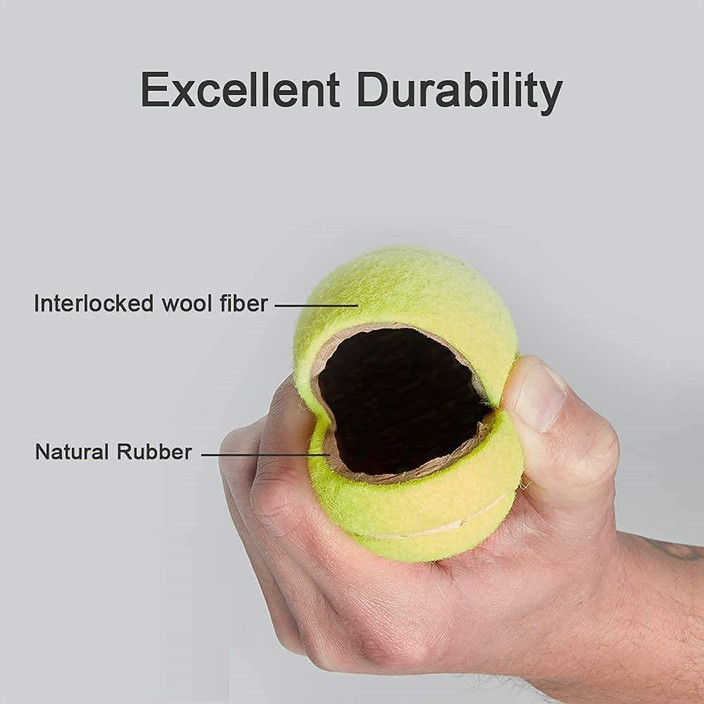
Credit: www.flipkart.com
Felt Covering
Felt covering gives tennis balls their unique texture and color. It consists of wool and nylon fibers. This combination ensures durability and optimal performance on the court.
The felt covering of a tennis ball is more than just a vibrant yellow exterior. It’s a crucial component that affects not only the ball’s appearance but also its performance on the court. You may have noticed that some tennis balls feel different from others, and this is largely due to the variations in their felt covering. It’s fascinating how something so seemingly simple can have such a significant impact on the game.Material And Texture
The felt covering is primarily made from a blend of wool and nylon. This unique combination ensures durability and resilience during intense matches. Wool offers excellent elasticity, allowing the ball to bounce efficiently, while nylon provides strength to withstand the wear and tear of hard surfaces. You might be surprised by the texture of the felt. It’s designed to be slightly fuzzy, which is intentional. The fuzz increases the ball’s grip on the racket and helps control its spin. Next time you hold a tennis ball, take a moment to feel the texture—it’s engineered for optimal performance.Impact On Gameplay
The felt covering directly influences how the ball moves through the air. A rougher texture can slow down the ball, giving players more control during fast-paced rallies. Conversely, a smoother covering allows for quicker shots, which might be preferred on faster courts. Have you ever wondered why professional players choose specific brands of tennis balls? It’s often due to the felt’s thickness and texture. These characteristics can change the speed and bounce of the ball, which is critical for strategy during matches. Next time you’re watching a game or playing yourself, consider how the felt covering impacts every shot. Would you choose a ball with more or less fuzz for your playing style? How does this affect your strategy on different surfaces?Environmental Considerations
Tennis balls are more than just tools for sport; they have a notable environmental footprint. As you enjoy a match, have you ever wondered about the sustainability of those fuzzy spheres bouncing across the court? Understanding the environmental considerations of tennis balls can lead to more eco-friendly practices and choices.
Sustainability Issues
Most tennis balls are made from rubber and felt, materials that are not easily biodegradable. The production process involves energy-intensive methods that contribute to carbon emissions. With millions of tennis balls manufactured yearly, their impact on the environment is significant.
Consider the lifespan of a tennis ball. After a few matches, the bounce diminishes, and many end up in landfills. This cycle of production, use, and disposal raises questions about the sustainability of our practices. Should manufacturers invest in greener alternatives or improve the durability of the balls?
Recycling Practices
While recycling tennis balls is challenging due to their composite materials, innovative solutions are emerging. Organizations are collecting used balls for repurposing, such as ground cover for playgrounds or noise-reducing panels.
As a player, you can participate in recycling initiatives. Look for collection bins at local courts or support brands that offer recycling programs. How can you contribute to reducing the environmental impact of tennis balls? Small actions can lead to significant change.
Ultimately, every bounce counts. By making informed choices and supporting sustainable practices, you can help reduce the environmental footprint of tennis balls. What changes will you make in your tennis routine to promote a greener planet?

Credit: www.youtube.com
Innovations In Design
Tennis balls have seen remarkable changes over the years. Innovations in design have made them more efficient and durable. From materials to structure, every aspect has evolved.
Technological Advances
Modern tennis balls use advanced materials. They incorporate synthetic rubber for better bounce. This material offers consistency in play. The felt covering has improved too. It now uses wool blends for enhanced durability. These changes enhance performance on the court.
Manufacturers focus on pressure retention. New technologies keep balls inflated longer. This innovation ensures a reliable bounce. Players experience less variability during matches. These advances contribute to fair play and enjoyment.
Future Trends
The future holds exciting prospects for tennis balls. Smart balls might track performance data. Sensors can measure speed and spin. This technology offers insights to players and coaches. It helps improve skills and strategies.
Eco-friendly materials are becoming popular. Manufacturers explore biodegradable options. Sustainable design reduces environmental impact. This trend aligns with global conservation efforts. Players may soon choose eco-conscious products for their games.
Frequently Asked Questions
What Are Tennis Balls Filled With?
Tennis balls are filled with pressurized air or nitrogen. This pressurization gives them their bounce. The felt covering enhances durability and grip. High-quality balls maintain optimal pressure for better performance during matches.
What Is The Liquid Inside A Tennis Ball?
Tennis balls contain a small amount of pressurized gas, usually air or nitrogen. This gas helps maintain their bounce and performance. The pressure inside the ball is key to ensuring it bounces correctly during play. The gas is sealed inside the rubber core of the ball.
Is It Safe To Cut Open A Tennis Ball?
Cutting open a tennis ball is generally safe. Use a sharp tool with caution to avoid injury. Ensure children are supervised. Dispose of the ball properly after cutting to prevent choking hazards for pets. Always prioritize safety and use appropriate tools for cutting.
What Is The Powder Inside Tennis Balls?
Tennis balls contain a powdery substance called magnesium carbonate. This powder helps maintain the ball’s pressure. It absorbs moisture, ensuring consistent bounce and performance during play.
Conclusion
Exploring the inside of a tennis ball is fascinating. The rubber core gives it bounce. The fuzzy outer felt helps control speed. Air pressure inside maintains shape and performance. Tennis balls are designed for precision and endurance. Understanding their structure enhances appreciation for the sport.
Next time you play, notice how the ball responds. Its design influences every shot. Each element serves a purpose. The balance of materials is key to its function. Discovering these details deepens your love for tennis. Enjoy playing and learning more about this iconic sports equipment.