
Are you looking to elevate your home workout routine? Filling your own punching bag could be the game-changer you need.
But where do you start? Whether you’re a boxing enthusiast or just someone eager to relieve stress and build strength, knowing how to properly fill a punching bag can make all the difference in your training. Imagine having a perfectly weighted bag that feels just right with every punch and kick.
You’ll be more motivated, see better results, and enjoy your workouts even more. Stay with us, and we’ll guide you through each step, ensuring your punching bag is filled to perfection, offering you the best workout experience every time. Ready to pack a punch? Let’s dive in!
Choosing The Right Filling Material
Choosing the right filling material for your punching bag can make all the difference in your training experience. The filling material impacts the bag’s weight, density, and feel, which ultimately affects how you punch and kick. Whether you’re aiming for a heavy, dense bag or a softer, more forgiving option, understanding your choices is crucial.
Sand
Sand is a popular choice for those seeking a heavier and more stable punching bag. It’s perfect for developing power and strength due to its dense nature. However, be cautious with sand. It can settle at the bottom over time, causing uneven weight distribution. Many users mix sand with other materials to prevent this issue. A friend of mine doubled his workout intensity after switching to sand-filled bags, but he also had to regularly adjust the filling to maintain consistency.
Fabric Scraps
Fabric scraps offer a softer, more forgiving bag, ideal for beginners or those focusing on technique. They create a consistent feel throughout the bag and are less likely to settle unevenly. Plus, using fabric scraps is an eco-friendly option, allowing you to recycle old clothes and textiles. Have you ever thought about the environmental impact of your workout gear? This could be your chance to make a difference.
Water
Water-filled bags provide a unique training experience, mimicking the sensation of hitting a human body. They’re adjustable in terms of weight, making them versatile for different training needs. However, they require a sturdy outer shell to prevent leaks. Water bags can be surprisingly effective, though maintenance might be challenging. Are you ready to experiment with something unconventional?

Credit: throwdown.com
Preparing The Bag For Filling
Choose a durable bag material and check for any tears or weak spots. Ensure the bag is clean and dry before filling. Secure the filling tightly to prevent shifting during use.
Preparing the bag for filling is a crucial step in ensuring your punching bag serves you well in your training sessions. A properly filled bag provides a realistic feel, absorbs impact effectively, and lasts longer. Before you start filling, taking a few minutes to prepare the bag can save you from future headaches. Let’s dive into how you can get your bag ready for the task.Inspecting The Bag
Before anything else, give your punching bag a thorough inspection. Check for any signs of wear and tear, like small rips or weak seams, that could worsen once the bag is filled. If you find any damage, repair it promptly. A simple patch kit or heavy-duty tape can help fix minor issues. Make sure the outer material is clean and free of debris. This can prevent dirt from mixing with the filling, keeping your bag in good condition.Securing The Opening
The opening of the bag is your gateway to a successful filling process. Ensure the zipper or closure mechanism is functional and secure. Consider using a heavy-duty seal or additional ties to reinforce the opening. This prevents any filling material from spilling out during use. When you’re ready to fill, keep the bag upright and stable. A secure base or a friend holding the bag can make this process much smoother. Feeling the right balance in your bag can make all the difference. So, how do you envision your perfect punching bag?Filling Techniques
Filling a punching bag correctly ensures a safe and effective workout. Proper filling techniques can significantly impact the bag’s performance and longevity. Using the right methods will provide the ideal resistance and feel. Let’s explore some effective techniques for filling your punching bag.
Layering Method
The layering method involves stacking different materials inside the bag. This technique ensures even weight distribution. Start by laying a base layer of heavier materials like sandbags. This gives the bag a stable foundation. Next, add a layer of shredded fabric or old clothes. These materials offer cushioning and absorb impact. Continue alternating between sand and fabric until the bag is full. Always finish with a fabric layer to soften the surface.
Compact Filling
Compact filling creates a firm and dense punching surface. Use materials like compressed fabric or foam. Pack the material tightly into the bag. Ensure there are no gaps or uneven spots. This method offers a consistent punching surface, ideal for strength training. Check the bag’s firmness regularly. Adjust the filling to maintain optimal compactness.
Achieving The Ideal Weight
Achieving the ideal weight involves more than just exercise. Properly filling a punching bag enhances your workout. Use materials like old clothes or sand to adjust the weight.
Achieving the ideal weight for your punching bag is crucial for effective training. A bag that’s too light won’t offer enough resistance, while one that’s too heavy can lead to injury. Finding that sweet spot will ensure you get the most out of your workout.Calculating Desired Weight
To determine the perfect weight for your punching bag, consider your own weight and fitness level. A good rule of thumb is to aim for a bag that’s about half your body weight. For instance, if you weigh 150 pounds, a 75-pound bag might be ideal. Think about your training goals. If you’re focusing on speed and technique, a lighter bag may be better. On the other hand, a heavier bag is great for building power and strength. Reflect on what you want to achieve before deciding on the weight.Adjusting Fill Quantity
Once you’ve calculated the desired weight, it’s time to adjust the fill quantity. Start by adding a base layer of sand or sawdust to provide a solid foundation. This will add substantial weight and ensure the bag maintains its shape. Next, add softer materials like fabric scraps or foam to help absorb impact and make the bag more forgiving. Layering these materials allows you to fine-tune the weight and feel of the bag. Keep testing the bag as you fill it. Punch and kick it to see if it provides the resistance you need. You can always add or remove material until it feels just right. Achieving the ideal weight for your punching bag is a balance of science and personal preference. How do you tailor yours for the perfect workout?Maintaining Even Distribution
Filling a punching bag requires evenly distributing the filling material. This ensures balanced weight and prevents uneven wear. Regularly check and adjust the filling to maintain its shape and effectiveness.
Maintaining an even distribution of filling in your punching bag is crucial for an effective workout and longevity of the bag. Uneven filling can lead to lumps, causing discomfort or even injuries during training. Ensuring that your punching bag is evenly filled will enhance your performance and provide a more realistic training experience. A balanced bag also helps in maintaining its shape and prevents unnecessary wear and tear. But how do you achieve that perfect evenness? Let’s dive into some practical tips to help you maintain an even distribution in your punching bag.Shaking And Settling
Once you’ve started filling your punching bag, it’s essential to periodically shake it. This helps the materials to settle evenly, avoiding the formation of hard spots. Simply lift the bag slightly and shake it gently from side to side. Imagine you’re packing a suitcase—you wouldn’t want all your clothes bunched on one side. The same principle applies here. You can also tap the sides of the bag with your hands to help the filling distribute evenly. Remember to repeat this process every time you add more filling. This ensures that each layer settles properly, creating a consistent density throughout the bag.Checking For Lumps
Regularly check your bag for any lumps or uneven spots. Run your hands over the surface and gently press to feel for any irregularities. Lumps can affect your training by altering the bag’s movement and impact. If you find any lumps, take immediate action. Redistribute the filling by removing some material and refilling, ensuring to shake and settle the bag as you go. You can also try using a long stick or rod to poke and prod the filling into place. This helps break up clumps and ensures a smooth surface. Have you ever punched a bag and felt an unexpected hard spot? By checking for lumps regularly, you can avoid these surprises and ensure a safer and more enjoyable workout.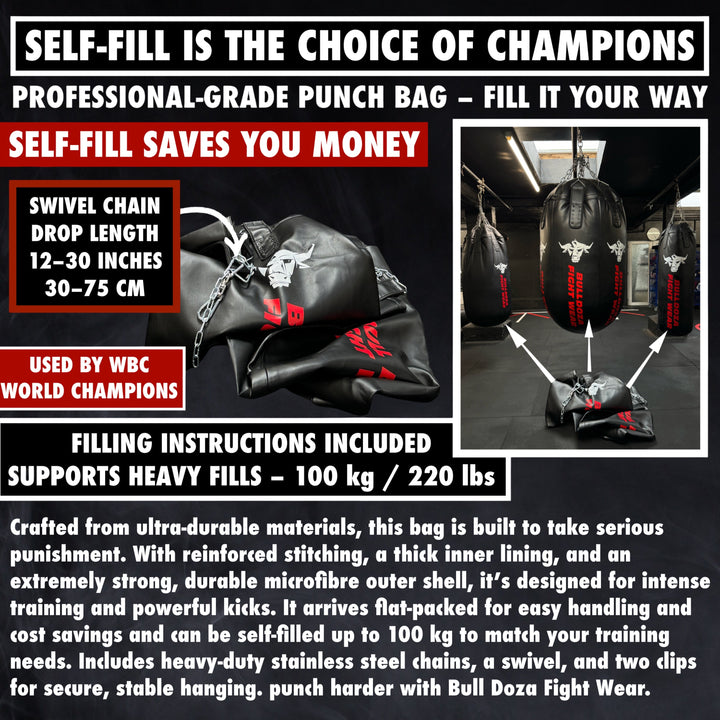
Credit: bulldozafightwear.co.uk
Sealing And Securing The Bag
Ensure the punching bag is tightly sealed to keep the filling secure. Use sturdy zippers or robust stitching for durability. Proper sealing prevents shifting of the contents, maintaining the bag’s shape and firmness.
Sealing and securing your punching bag is crucial to ensure it remains intact through countless strikes and kicks. It’s an often overlooked step that can significantly affect your training experience. A secure closure prevents unwanted spills and maintains the weight distribution, providing a consistent feel every time you hit the bag. Let’s explore some reliable methods to seal and secure your punching bag effectively.Using Zippers And Velcro
Zippers and Velcro are popular options for sealing punching bags due to their ease of use and reliability. Zippers provide a tight seal, minimizing the risk of contents spilling out. They’re particularly useful for bags that undergo frequent refills or adjustments. Velcro offers flexibility in securing the bag, allowing quick access if you need to make modifications or add more filling. Consider using a combination of both for added security. This dual approach offers the convenience of Velcro with the reliability of a zipper.Reinforcing With Tape
Tape can be a lifesaver when it comes to reinforcing your punching bag’s seal. Duct tape is a popular choice due to its durability and strong adhesion. It can cover seams and gaps effectively, giving your bag extra security. Use multiple layers of tape for maximum strength, especially around the closure areas. This adds a robust barrier against wear and tear. Don’t forget to check the tape regularly, ensuring it remains intact and replace it as needed. This proactive approach keeps your bag in top condition. Have you ever considered how a simple roll of tape could extend the life of your punching bag? Give it a try and see the difference it makes!Safety Considerations
Ensure the punching bag is securely mounted before filling. Use protective gloves to avoid injuries from sharp filling materials. Maintain a balanced weight distribution to prevent bag instability during use.
Safety considerations play a crucial role in filling a punching bag effectively. Ensuring safety not only prevents injuries but also prolongs the lifespan of your punching bag. It’s essential to be mindful of every step involved in the filling process. From selecting the right materials to checking the equipment, safety should always be your priority.Avoiding Injuries
Before starting, wear protective gloves to safeguard your hands. Improper handling can lead to cuts or bruises. Ensure your working area is clear of obstacles. This prevents trips and falls. Pay attention to your posture while lifting materials. Improper posture can strain your back. Use tools carefully, especially sharp objects. Avoid rushing the process to minimize accidents.Checking For Leaks
Inspect the punching bag for any existing leaks before filling. Leaks can cause uneven distribution of filling materials. They can also lead to loss of filling, affecting performance. Use duct tape to temporarily patch up small holes. For larger leaks, consider professional repair options. Regularly check the bag after filling to ensure it’s sealed properly.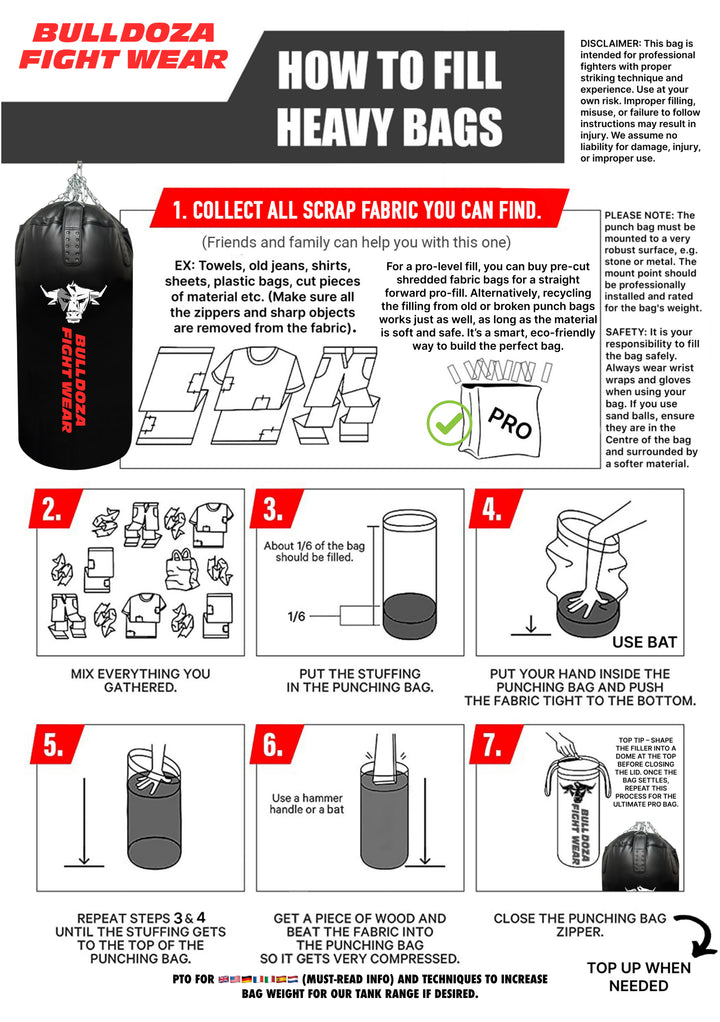
Credit: bulldozafightwear.co.uk
Tips For Long-lasting Performance
For durable punching bag performance, fill the bag with sand or fabric strips. Ensure the filling is evenly distributed. Avoid overpacking to maintain flexibility and prevent wear.
Filling your punching bag correctly ensures long-lasting performance. Proper maintenance is key. Follow these tips to keep your bag in top shape.Regular Inspections
Regularly check your punching bag for any damage. Look for tears or weak spots. Inspect the stitching carefully. This helps prevent further wear. Early detection of problems saves time and money. Clean the bag to remove sweat and dirt. Use a damp cloth for this task. Ensure it’s dry before storing it. Proper care extends the bag’s life.Replacing Worn Fill
Over time, the fill inside your bag wears out. This affects its performance. Replace worn fill with fresh materials. Choose durable fillers like sand or foam. Ensure even distribution inside the bag. This maintains its shape and firmness. Regularly replacing fill keeps the bag effective. It’s important for a good workout experience.Frequently Asked Questions
What Is The Best Thing To Fill A Punching Bag With?
Fill a punching bag with sand for weight and density. Use old clothes for softness and shock absorption. This combination ensures durability and effective training. Securely pack materials to prevent shifting during use. Adjust the filling based on your workout needs and bag size.
Is It Okay To Fill A Punching Bag With Sand?
Filling a punching bag with sand is not recommended. Sand can make the bag too heavy and hard. This may lead to injuries or damage to the bag. Use materials like fabric or foam for better shock absorption and safety.
What Kind Of Pump Do I Need To Fill My Punching Bag?
Use a hand pump or electric air pump to fill your punching bag. Ensure the pump fits the bag’s valve properly.
Should I Buy A Filled Or Unfilled Punching Bag?
Choose a filled punching bag for convenience and immediate use. Opt for an unfilled one if you want to customize the weight and filling. Consider your budget and space before deciding. Both options have unique benefits depending on your needs and preferences.
Conclusion
Filling a punching bag is easy with the right materials. Choose between sand, fabric, or water-filled bags. Each option offers different benefits for your training needs. Sand provides weight and stability. Fabric is softer and more forgiving. Water bags offer flexibility and portability.
Consider what fits your workout best. Properly filled bags enhance your practice sessions. Enjoy more effective punches and kicks. Make sure to secure the bag tightly. Avoid overstuffing or underfilling. A well-filled bag lasts longer and boosts performance. Happy training! Embrace the challenge, improve your skills, and find your rhythm.