
Are you ready to step up your fitness game or enhance your martial arts skills? A punching bag is the perfect tool for you.
But there’s one question that might be holding you back: How do you fill a punching bag? It’s a common query, and getting it right can transform your workout experience. Imagine the satisfaction of landing that perfect punch, knowing your bag is filled just the way you like it.
You’ll discover simple steps to fill your punching bag, ensuring it meets your unique needs. Whether you’re aiming for a firmer surface or a softer one, the secrets to achieving your perfect punching bag are just a few lines away. Keep reading and unlock the power of a well-filled punching bag tailored just for you!

Credit: www.ebay.com
Choosing The Right Filling Material
Choosing the right filling material for a punching bag impacts performance and durability. Sand offers weight, while cloth provides softness. Mixing both can balance firmness and shock absorption.
Choosing the right filling material for a punching bag is essential. It affects its weight, feel, and durability. Different materials offer unique benefits. Let’s explore some popular options.Sand Vs. Water
Sand is a common choice for heavy bags. It adds weight and stability. It provides a firm surface for powerful punches. Sand can settle over time. You may need to refill or redistribute it. Water offers a different feel. It can absorb impact and reduce strain on joints. Water is easy to adjust for desired weight. You need a waterproof bag to use water safely.Rags And Fabric Scraps
Rags and fabric scraps are cost-effective. They provide a softer feel. This option is great for beginners. It cushions punches, reducing impact. Fabrics can shift inside the bag. Compact them tightly to avoid uneven surfaces. Use old clothing or towels. It’s an eco-friendly choice, reusing materials.Foam Inserts
Foam inserts offer consistent density. They maintain shape over time. Foam is lightweight, ideal for speed bags. It provides a soft surface, gentle on hands. Foam is easy to cut and fit inside. You can combine foam with other materials. This creates a custom feel for your bag.Preparing The Punching Bag
Filling a punching bag requires careful selection of materials like sand, fabric, or sawdust. Ensure even distribution to maintain balance and durability. Secure the filling tightly to prevent shifting during use.
Preparing the Punching Bag Before filling a punching bag, prepare it properly. This ensures durability and performance. A well-prepared bag offers a safe and enjoyable workout.Checking The Bag For Damage
Examine the bag thoroughly. Look for tears or weak spots. Check seams for any fraying. Ensure zippers and closures are functional. A damaged bag can be unsafe. Address issues before filling.Securing The Bag’s Opening
Ensure the bag’s opening is secure. Use a sturdy rope or strong zipper. This prevents filling from spilling out. A secure closure maintains the bag’s shape. It also extends the bag’s lifespan.Filling Techniques
Filling a punching bag requires careful selection of materials like fabric, sand, or rubber mulch. Ensure even distribution for balanced weight. Secure the bag tightly to maintain its shape during workouts.
Filling a punching bag might seem straightforward, but the technique you choose can significantly impact your training experience. Whether you’re a beginner or a seasoned boxer, understanding the different filling methods will help you tailor your bag to suit your needs. Let’s delve into some effective techniques to get your punching bag just right.Layering Method
The layering method is all about creating a balanced weight distribution. Begin by placing a layer of small, cloth rags at the bottom of the bag. This helps in cushioning and prevents the bag from feeling too hard. Next, add a layer of sandbags or sawdust to increase weight. Alternate these layers to achieve the desired heft and consistency. This method ensures the bag remains firm yet soft enough to absorb punches effectively.Compact Filling Strategy
For those who prefer a denser bag, the compact filling strategy might be the way to go. Start by tightly packing old clothes or fabric scraps. Make sure to compress them as much as possible to eliminate air pockets. You can use a stick or bat to push down the filling as you go. This approach results in a heavier bag that offers more resistance, ideal for strength training. However, ensure you don’t overstuff, as this can make the bag too hard and uncomfortable to hit.Combining Materials
Why limit yourself to one type of filler when you can combine them for optimal performance? Mixing materials allows you to customize the bag’s feel and weight. Consider using a blend of shredded fabric, rubber mulch, and sand. Each material brings something unique: fabric for softness, rubber mulch for bounce, and sand for weight. Experiment with different combinations until you find what suits your training style best. This approach not only enhances functionality but also extends the lifespan of your bag. Which method resonates with you? Whether it’s the balanced layering, the firm compact approach, or the creative mix of materials, remember that the key is to align the filling with your training goals.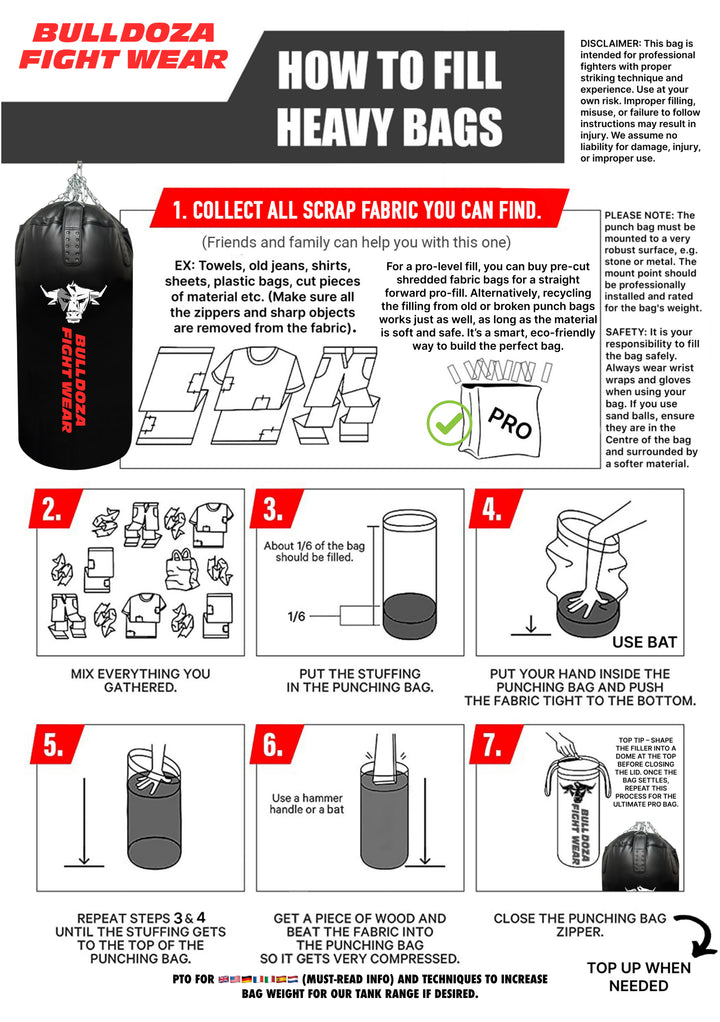
Credit: bulldozafightwear.co.uk
Ensuring Even Distribution
Filling a punching bag evenly requires careful layering of materials. Begin with fabric scraps or old clothes. Follow this with sandbags or sawdust, maintaining balance throughout. Ensure the center is packed firmly to prevent sagging, while keeping the outer layers softer for better absorption.
Ensuring even distribution in a punching bag is essential. A well-filled bag provides consistent resistance and enhances your training. Uneven filling can lead to unwanted shifting. It might even cause injuries. Here are some tips to ensure your bag is filled evenly.Avoiding Air Pockets
Air pockets can disrupt the balance. They may cause uneven resistance. To prevent them, pack the filling tightly. Use a stick or rod to press down the material. Fill in any gaps that appear. Layer the material evenly. Alternate between different filler types for better results. Consistency is key.Testing Weight Balance
Testing the weight balance is crucial. Check the bag’s weight distribution by punching it. Feel for any shifts or uneven spots. If it moves too much, adjust the filling. Add or remove material where needed. Ensure the top, middle, and bottom have similar weights. A balanced bag improves training effectiveness.Maintaining Your Punching Bag
Filling a punching bag requires the right materials for balance and durability. Use sand for a heavier bag, and add fabric for cushioning. Ensure even distribution to prevent sagging and maintain shape.
Maintaining your punching bag ensures it lasts long and stays effective. Regular care keeps it in top condition for your workouts. A well-maintained bag offers a better training experience.Regular Inspections
Check your punching bag weekly for wear and tear. Look for any signs of damage or leaks. Inspect the seams and outer material carefully. If you spot any issues, repair them promptly. This prevents further damage and prolongs the bag’s life.Refilling Tips
Over time, your bag might lose some filling. Refill it to maintain the right firmness. Use old clothes, sawdust, or sand for refilling. Make sure the filling is evenly distributed. This ensures a consistent punching surface. Avoid overfilling to prevent the bag from becoming too hard. Adjust the filling as needed for your comfort.Expert Advice And Common Mistakes
Expert tips suggest using materials like sand or fabric scraps for filling a punching bag. Avoid overfilling, as it can cause damage. Common mistakes include not evenly distributing the filling, leading to uneven weight and performance issues.
Filling a punching bag might seem like a simple task, but it’s easy to make mistakes that can affect your training. Whether you’re a beginner or have been practicing for years, expert advice can save you from common pitfalls. Let’s dive into some tips to ensure you fill your punching bag correctly and avoid common errors.Avoiding Overfilling
One common mistake when filling a punching bag is overfilling it. A well-filled bag should have some give to it, allowing you to practice both speed and power. If you stuff your bag too tightly, you risk injury from the lack of cushion. Consider leaving some space at the top to allow for compression and movement. Think of your bag like a sponge—it should absorb impact without being rock-hard. How does your bag feel when you punch it? If your fist is met with a wall-like resistance, it’s time to remove some filling.Choosing The Right Weight
Selecting the proper weight for your punching bag is crucial for effective training. Beginners might opt for a lighter bag, around 70 pounds, while more experienced fighters could choose a heavier bag, up to 100 pounds or more. The weight impacts the swing and motion of the bag, influencing your workout. A heavier bag moves less, providing a solid target for power punches. Finding the right balance is key. If you’re unsure, test different weights to see which best suits your training needs. Remember, the bag should challenge you, not frustrate you. By considering these expert tips, you can ensure your punching bag is filled correctly, enhancing your training experience. What adjustments will you make to your bag for optimal practice?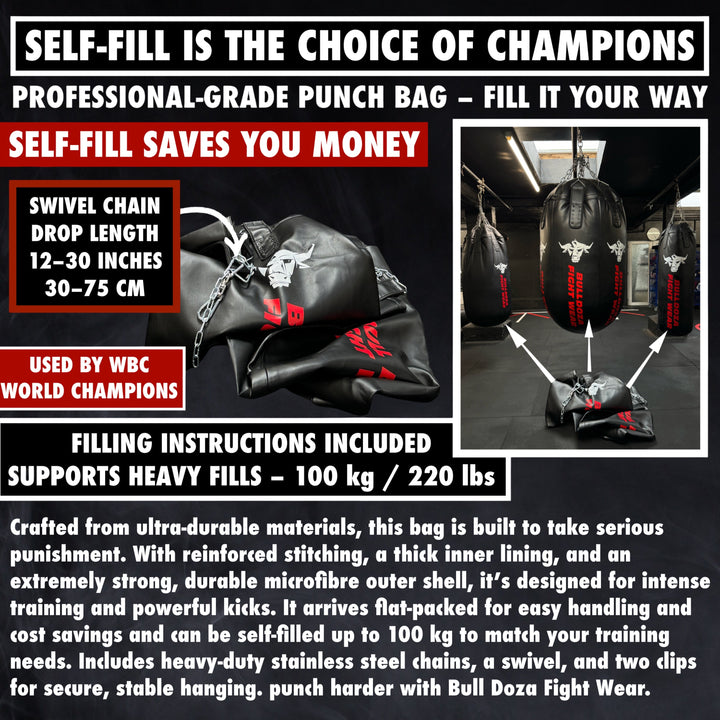
Credit: bulldozafightwear.co.uk
Frequently Asked Questions
What Is The Best Thing To Fill A Punching Bag With?
The best material to fill a punching bag is a mix of sand, cloth, and foam. Sand adds weight, cloth provides softness, and foam maintains shape. This combination offers optimal density and durability for effective training. Ensure the bag is tightly packed to prevent shifting during use.
What Kind Of Pump Do I Need To Fill My Punching Bag?
Use an air pump or a hand pump to fill your punching bag. Ensure it has a compatible nozzle. Choose a pump designed for inflatables to make the process easier. Check the bag’s valve type before purchasing the pump to ensure a proper fit.
Should You Fill A Standing Punching Bag With Sand Or Water?
Filling a standing punching bag with sand provides stability and weight, ideal for powerful strikes. Water makes it easier to move and adjust, perfect for lighter training. Choose sand for durability, water for convenience. Always follow the manufacturer’s guidelines for the best results.
Should I Fill My Punching Bag With Water Or Sand?
Fill your punching bag with sand for a firmer feel and heavier weight. Use water for a softer impact and easier portability. Sand is ideal for strength training, while water suits beginners or lighter workouts. Choose based on your training needs and preferences for optimal results.
Conclusion
Filling a punching bag is simple yet crucial for effective training. Choose the right filling material for your workout needs. Sand, clothes, or water all offer different benefits. Ensure the bag is filled evenly for balanced weight. This prevents injury and enhances your punching technique.
Regularly check for wear or leaks. Adjust the filling when needed to maintain optimal performance. A well-filled punching bag boosts strength and endurance. Remember, consistent care keeps your gear in top shape. Happy training!