
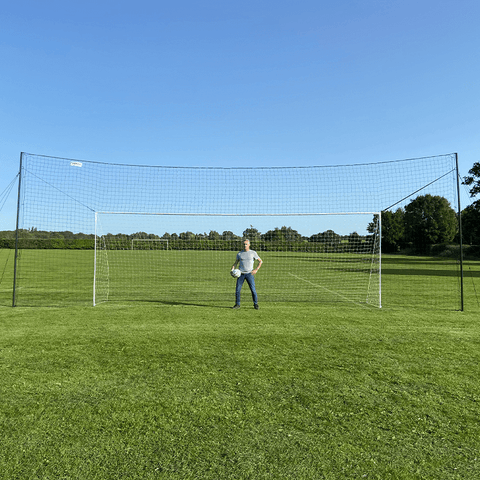
Are you a soccer enthusiast or a coach looking to set up the perfect field? Understanding the regulation soccer goal size is crucial, whether you’re organizing a local match or just setting up a practice field.
You might wonder why goal sizes matter so much. Well, they do, and knowing the right dimensions can make or break the game experience. Picture this: the thrill of a game-winning goal, the precision of a well-aimed shot, all hinging on that perfectly sized goal.
Dive into this article to uncover the exact dimensions that can elevate your game, ensure fair play, and bring out the best in every match. Your journey to becoming a soccer setup expert starts here.
Standard Soccer Goal Dimensions
Regulation soccer goals measure 24 feet wide and 8 feet high. This size is used in professional and international matches, ensuring uniformity across competitions. The dimensions help maintain fair play and consistency in the game.
Soccer is a game of precision and skill, but have you ever wondered about the dimensions of the goal you’re aiming for? The size of a soccer goal is crucial, not just for the players but for the integrity of the game itself. Understanding these dimensions can give you a new perspective on the strategies teams employ during matches. Imagine lining up for a penalty shot, knowing exactly the space you have to work with. The standard dimensions for a soccer goal are 8 feet high and 24 feet wide. This size is typical for professional and international matches, ensuring consistency across different leagues and tournaments. These measurements are designed to balance the challenge for goalkeepers while providing enough opportunity for skilled shooters to score.Why Goal Dimensions Matter
Have you ever considered how goal size affects gameplay? A larger goal might make scoring easier, but it also demands more from the goalkeeper in terms of agility and strategy. Conversely, a smaller goal could lead to fewer goals, changing the dynamics of the game entirely. This balance is key to maintaining the thrill and competitiveness of soccer.Impact On Player Strategy
Knowing the exact dimensions can influence how players approach their shots. For example, players might aim for the corners where the goalkeeper has the least reach, or they might use the width to stretch the defense. These strategies are crafted with the goal dimensions in mind, making every shot a calculated decision rather than just a hopeful kick.Adjusting For Different Levels
While professional matches adhere strictly to the standard size, youth leagues and recreational games often modify the dimensions to suit different age groups. This is done to ensure that players can develop their skills effectively without being overwhelmed by the scale of a professional-sized goal.Are You Ready For The Challenge?
Next time you watch or play soccer, consider how these dimensions play a role in every aspect of the game. Are you up for the challenge of mastering the art of scoring within these confines? Understanding these elements could be your secret weapon for success on the field.
Credit: www.amazon.com
Fifa Regulations On Goal Size
Regulation soccer goal size is set by FIFA at 8 feet high and 24 feet wide. This standardized size ensures consistency in matches worldwide, providing a fair playing field for all teams.
When it comes to soccer, the size of the goal is not just a random decision; it’s a crucial element that impacts the dynamics of the game. Understanding FIFA’s regulations on goal size can enhance your appreciation for the sport. Whether you’re a player, a coach, or simply a fan, knowing the standard dimensions can offer insights into how goals are scored and saved, and how teams strategize around this essential feature of the field.Fifa’s Official Goal Dimensions
According to FIFA, the standard goal size for professional matches is 24 feet wide and 8 feet high. This creates a challenging target for players and a formidable barrier for goalkeepers. Think about it: scoring a goal requires precision and skill, and defending one demands agility and keen awareness.Why Goal Size Matters
The regulation size is not just about fairness; it influences the style of play. Larger goals might lead to more scoring and possibly less emphasis on defensive tactics. If you’re coaching young players, consider how adjusting goal size in practice can help develop their skills. Does a smaller goal enhance focus on accuracy, or does a larger goal encourage creative play?Impact On Game Strategy
Teams often design their strategies around the size of the goal. A wider goal might tempt teams to rely more on attacking plays, while a smaller one could shift focus to defense. How does your favorite team adapt their strategy to the regulation goal size? Observing these tactics might give you a deeper understanding of game dynamics.Historical Changes In Goal Size
Did you know that goal sizes have evolved over time? While FIFA’s regulations are now standardized, historical variations were common. This evolution reflects the changing nature of the sport and its global expansion. Imagine how different the game might have been with larger or smaller goals in the early days.Personal Experience On The Field
Playing with different goal sizes can be eye-opening. I remember scoring in a match with smaller goals—it felt like an extraordinary achievement. Have you tried playing with different goal dimensions? It’s a great way to challenge your skills and understand the impact of goal size firsthand. Understanding the intricacies of FIFA’s regulations on goal size can deepen your engagement with soccer. Whether watching or playing, consider how this fundamental aspect influences the game. How might the game change with different goal dimensions?Youth Soccer Goal Sizes
Understanding youth soccer goal sizes is crucial for nurturing young players as they grow and develop their skills. Different age groups require different goal dimensions to match their physical abilities and enhance their playing experience. Knowing these sizes can make a world of difference in how your child interacts with the game and achieves success on the field. Let’s dive into the specifics of youth soccer goal sizes for various age groups.
Under-6 To Under-8
For children aged under-6 to under-8, the goal size is typically smaller to match their developing skills and physical stature. These goals often measure around 4 feet high by 6 feet wide. Smaller goals are less intimidating, making it easier for young players to focus on learning the basics of soccer.
Imagine the joy on your child’s face when they score a goal that’s perfectly sized for them. Smaller goals encourage active participation and boost confidence, which is crucial at this formative stage.
Under-9 To Under-12
As players move into the under-9 to under-12 age group, the goal sizes increase to accommodate their growing abilities. Typically, these goals are around 6.5 feet high by 18.5 feet wide. These dimensions provide a balanced challenge, helping young players refine their skills.
Have you noticed your child’s increased agility and strength? Larger goals allow for more dynamic play, encouraging teamwork and strategy development, essential aspects of soccer that become more pronounced at this age.
Under-13 And Above
Once players reach under-13 and above, they transition to full-size goals, which are 8 feet high by 24 feet wide. This aligns with standard adult soccer goal dimensions and prepares them for competitive play.
Is your child ready for the big leagues? Full-size goals not only test their skills but also push them to enhance their strategic thinking and physical endurance, essential for facing tougher competition.
Understanding goal sizes isn’t just about the numbers; it’s about shaping the future of young players. How will you use this information to support your child’s soccer journey?

Credit: www.amazon.com
Materials And Construction
Regulation soccer goals must meet specific standards in materials and construction. These standards ensure durability, safety, and performance. The frame and net are crucial components. They must withstand intense play and varying weather conditions.
Frame Materials
The frame of a regulation soccer goal is typically made from metal. Aluminum and steel are common choices. Aluminum is lightweight yet strong. It is resistant to rust, making it ideal for outdoor use. Steel provides extra strength and stability. It is often used in permanent installations. Both materials ensure the goal maintains its shape under pressure.
Net Specifications
The net of a soccer goal is made from durable synthetic fibers. Nylon and polyethylene are popular choices. These materials are resistant to wear and tear. They can endure constant impact from soccer balls. The net’s mesh size is also important. It ensures the ball does not pass through. Typically, the mesh size is around 4.5 to 5 inches. This size balances safety and visibility for players and spectators.
Safety Standards
Regulation soccer goal size ensures fair play and safety. FIFA mandates goals measuring 24 feet wide and 8 feet high. These dimensions are critical for maintaining consistent gameplay across different levels of competition.
Safety standards are crucial in ensuring that soccer remains not only a thrilling sport but also a safe one for all players. The regulation soccer goal size isn’t just about dimensions; it includes specific safety measures to protect players. Understanding these standards can help you make informed decisions, whether you’re setting up a local game or managing a professional team.Anchoring And Stability
A soccer goal must be stable and securely anchored to prevent accidents. Imagine a gust of wind or a player colliding with an unsecured goal—dangerous scenarios that can be easily avoided with proper anchoring. Most regulation goals come with ground anchors or weighted bases. These features ensure the goal stays put, regardless of the intensity of play. It’s essential to regularly check the stability of the goalposts. This simple act can prevent injuries and keep the game running smoothly.Padding And Protection
Padding around the goalposts can be a game-changer, especially in youth leagues. It reduces the risk of injury if a player accidentally runs into the posts during a fast-paced match. Consider adding soft padding that wraps around the posts. This can be especially helpful in training sessions where players might be less aware of their surroundings. Have you ever seen a player hit the post and wince in pain? Padding can help alleviate those moments and keep the focus on the game. By prioritizing these safety standards, you’re not just complying with regulations—you’re actively contributing to a safer, more enjoyable soccer experience for everyone involved. What measures will you take to ensure the safety of your players?Choosing The Right Goal For Your Needs
Choosing the right soccer goal is crucial for every player or team. Regulation soccer goal sizes vary, and selecting the best one depends on your needs. Consider factors like space, purpose, and budget before making a decision.
Considerations For Purchase
Before buying a soccer goal, evaluate where you will place it. Measure the space to ensure it fits. Think about who will use it. Youth players need smaller goals compared to adults. Decide if portability is important. Foldable goals are ideal for easy storage and transport. Establish your budget. Quality varies, so choose one that meets your requirements without overspending.
Maintenance Tips
Regular maintenance keeps your soccer goal in top condition. Clean it frequently to remove dirt and debris. Check for signs of wear. Tighten loose bolts and replace damaged parts. Store goals properly when not in use. Protect them from harsh weather. Follow manufacturer guidelines for care and upkeep. Well-maintained goals last longer and provide a better playing experience.
Impact Of Goal Size On Gameplay
Regulation soccer goal size measures 24 feet wide by 8 feet high. This standard impacts gameplay, influencing shot strategy and goalkeeper tactics. Understanding goal dimensions helps players improve their skills and adapt their techniques.
The size of a soccer goal may seem like a trivial detail, but it significantly influences the dynamics of the game. The standard regulation soccer goal measures 8 feet in height and 24 feet in width. This seemingly simple framework impacts everything from scoring potential to defensive tactics. Understanding how goal size affects gameplay can offer you deeper insights into the sport.Influence On Scoring
The dimensions of the goal create opportunities and challenges for players. A larger goal area can increase the chances of scoring, making games more thrilling and unpredictable. With more room to aim at, strikers find it easier to place the ball past the goalkeeper, leading to potentially higher-scoring matches. However, this doesn’t mean goals come easy. Goalkeepers must enhance their agility and anticipation skills to cover this expansive target. As a player, have you ever thought about how you could improve your aim to exploit this advantage fully?Effect On Defensive Strategies
Defensive strategies are directly affected by the size of the goal. Teams often deploy different formations and tactics to shield this large space effectively. Defenders must stay alert and coordinate well to block potential shots on goal. A larger goal requires more strategic positioning, as defenders need to cover more ground. This may involve using zonal marking systems or deploying additional players to fortify the defense. Think about how your team could adjust its defensive setup to minimize scoring opportunities for the opposition. The goal size challenges both the offensive and defensive lines to constantly adapt and innovate. Each match becomes a test of skill, strategy, and teamwork. Are you ready to rethink your approach to make the most of these dimensions on the field?
Credit: www.amazon.com
Frequently Asked Questions
What Is A Regulation Size Soccer Goal?
A regulation size soccer goal measures 24 feet wide and 8 feet tall. It is used in professional and international matches. The goalposts and crossbar must be white and made of approved material like wood or metal. Proper size ensures fair play and standardization across competitions.
What Is The Size Of A Fifa Goal?
A FIFA goal measures 24 feet wide and 8 feet high. It is used in official matches worldwide. Goalposts and crossbars are typically made of metal for durability. The goal’s size ensures fairness and consistency across all professional football matches.
What Size Is A Soccer Goal In The Mls?
MLS soccer goals measure 8 feet high and 24 feet wide. This standard size ensures consistency across matches. The dimensions are set by FIFA, making them uniform worldwide. These goalposts are used in professional soccer leagues to maintain fairness and uniformity.
How Big Is A Regulation Football Goal?
A regulation football goal measures 24 feet wide and 8 feet tall. The goalposts are 8 yards apart. The crossbar is 8 feet above the ground. These dimensions are standard for professional play. Ensure the goal is securely anchored for safe matches.
Conclusion
Regulation soccer goal sizes ensure fair play and consistency. These dimensions are vital for maintaining standards in matches. Understanding goal size helps players and coaches plan effectively. It aids training and strategy development. Soccer enthusiasts gain insight into game setup and rules.
Knowing goal size enhances appreciation of the sport’s structure. A uniform goal size fosters equality in competitive play. Fans and players can enjoy soccer with this standardized framework. It adds balance and fairness to every match. Soccer thrives on such well-defined rules.
Keep enjoying the game with this knowledge in mind.