
Ever wondered why certain business decisions seem to change overnight while others take years? You’re not alone.
The concept of the “short run” in economics might just hold the answers you’re looking for. It’s a crucial idea that helps explain how businesses and markets react to immediate changes. Understanding the short run can empower you to make smarter economic choices, whether you’re running a business or planning your personal finances.
Stick around to discover why this concept is more relevant to your life than you might think. This could be the key to unlocking a deeper understanding of how economic forces shape the world around you.

Credit: www.facebook.com
Short Run In Economics
Short Run in Economics refers to a period where some inputs are fixed while others can change. Businesses adjust production levels, but not all resources can be varied quickly. This concept helps analyze short-term decision-making and resource allocation.
Understanding the concept of the ‘Short Run’ in economics can be a game-changer for grasping how businesses and markets operate under constraints. The short run is a period during which at least one factor of production is fixed. This allows firms to adjust to changes in demand or supply, but only to a limited extent. It’s a crucial concept for anyone looking to comprehend how businesses navigate temporary challenges and opportunities.Definition And Characteristics
In economic terms, the short run is defined as the period in which some inputs, like capital, remain fixed, while others, like labor, can be adjusted. Imagine running a bakery. You can’t instantly expand your kitchen space, but you can hire more bakers to meet increased demand. This flexibility is what characterizes the short run. It’s a time of partial adjustment, where businesses make do with what they have. Decisions made in the short run often revolve around optimizing the use of available resources.Comparison With Long Run
The main difference between the short run and the long run lies in flexibility. In the long run, all factors of production can be varied. You can build that larger kitchen or even open a new branch if business is booming. The short run, however, is about making strategic choices within constraints. It’s like juggling while waiting for an extra pair of hands. Have you ever wondered why some companies thrive during a sudden market shift while others struggle? Understanding the dynamics of the short run might be the answer. How do you think your business or area of interest adapts during the short run? This consideration could offer practical insights into strategic planning and risk management.Production In The Short Run
The short run in economics refers to a period where some factors of production are fixed. Businesses adjust production levels with existing resources. Understanding production in the short run helps analyze output and costs.
Fixed And Variable Inputs
In the short run, certain inputs remain fixed. These include buildings and machinery. These inputs do not change with output levels. Variable inputs, like labor and raw materials, can change. Businesses adjust these based on production needs. This flexibility impacts production costs and efficiency.
Law Of Diminishing Returns
The law of diminishing returns plays a key role here. It states that adding more of a variable input to a fixed input will eventually yield lower per-unit returns. Initially, output increases with additional input. But, after a point, each extra unit adds less output. This concept helps businesses optimize their resource allocation.
Cost Structures In The Short Run
Short run in economics refers to a period where some factors are fixed. Costs like rent and salaries remain unchanged. Variable costs, such as raw materials, can change with production levels.
In economics, the short run is a period where some factors are fixed. Cost structures in this period are crucial for understanding business decisions. Businesses need to understand these costs to manage production efficiently.Fixed Costs
Fixed costs do not change with output levels. They are constant over a short time. Examples include rent, salaries, and insurance. These costs remain the same regardless of how much a company produces. Even if production stops, fixed costs must be paid. Understanding fixed costs helps businesses plan their budgets effectively.Variable Costs
Variable costs change with the level of output. These costs rise as production increases. Materials, labor, and utilities are common examples. Variable costs fluctuate based on production needs. Managing these costs is vital for profitability. Businesses can adjust production to control these expenses.Marginal Costs
Marginal costs refer to the cost of producing one more unit. This cost is crucial for decision-making. It helps determine the optimal production level. Knowing marginal costs assists businesses in setting prices. Businesses aim to produce where marginal cost equals marginal revenue. This ensures maximum profitability.Market Behavior In The Short Run
Understanding market behavior in the short run helps grasp economic dynamics. The short run refers to a period where at least one factor of production is fixed. Businesses face constraints and cannot fully adjust all inputs. This affects how markets operate and respond to changes. Explore how prices are determined and supply and demand interact in this timeframe.
Price Determination
In the short run, prices can fluctuate due to limited flexibility. Fixed production factors mean businesses can’t quickly change their output. This often leads to price variations based on demand shifts. For instance, a sudden increase in demand can lead to higher prices. Businesses cannot instantly increase supply, so prices rise to balance demand. This price adjustment reflects the temporary constraints of production.
Supply And Demand Dynamics
Supply and demand dynamics are crucial in the short run. With fixed inputs, supply can be relatively inelastic. It means supply doesn’t respond quickly to demand changes. Demand shifts can thus have a pronounced impact on market equilibrium. A higher demand without an immediate supply increase leads to shortages. These shortages often drive prices up, affecting consumer behavior. Conversely, if demand falls, prices might drop as firms aim to sell excess inventory.
Short Run Business Strategies
In economics, the short run is a period where certain factors remain fixed. Businesses must adapt quickly to changes and challenges during this time. Short run business strategies play a crucial role in ensuring survival and growth. These strategies help companies respond swiftly to market demands, production capacity, and cost changes.
Pricing Strategies
Pricing is vital in the short run. Companies often adjust prices to stay competitive. Discounts and promotions attract more customers. Dynamic pricing can maximize revenue. It involves changing prices based on demand and market conditions. Price skimming helps recover initial costs quickly. This involves setting high prices for new products initially.
Production Adjustments
Production adjustments are essential in the short run. Businesses may alter production levels to match demand. This prevents overproduction and minimizes costs. Temporary workers help meet sudden demand spikes. Outsourcing can be a solution for short-term capacity issues. Efficient inventory management ensures quick response to market changes.
Credit: www.reddit.com
Implications For Economic Policy
Understanding the short run in economics is crucial for economic policy decisions. It refers to a period where some factors are fixed, impacting supply and demand dynamics. Policymakers must consider these constraints to effectively manage economic growth and stability.
In economics, the short run refers to a period during which certain factors of production are fixed. This concept affects economic policy decisions. Policymakers must understand the short run’s limitations and opportunities. These insights guide decisions on employment, inflation, and more.Impact On Employment
Employment levels can fluctuate significantly in the short run. Businesses may hesitate to hire due to uncertain demand. Fixed costs can limit their flexibility. Economic policies that reduce uncertainty can help. Incentives for hiring can boost employment quickly. Training programs can prepare workers for available jobs.Influence On Inflation
Inflation can be volatile in the short run. Supply chain disruptions may cause price spikes. Policymakers often monitor these factors closely. Temporary measures may be needed to stabilize prices. Interest rate adjustments can influence inflation. Short-term policies aim to prevent long-term issues.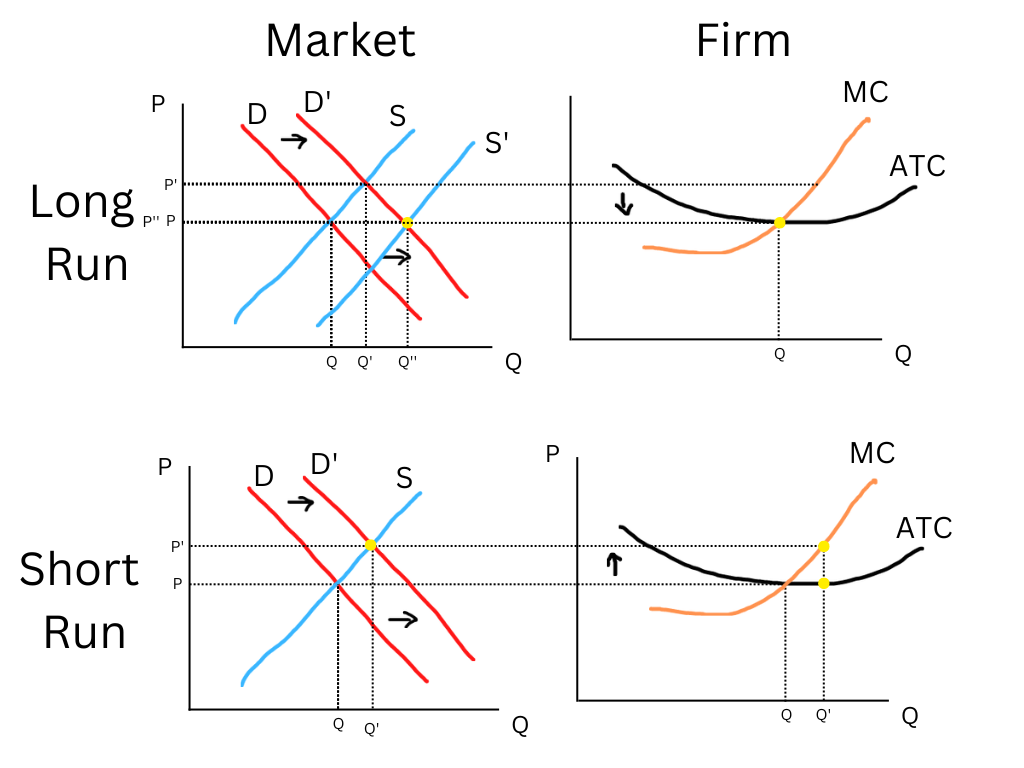
Credit: jonwlaw.medium.com
Frequently Asked Questions
What Is A Short Run In Economics?
The short run in economics is a period where some factors, like capital, are fixed. Firms can only adjust variable inputs, such as labor, in response to changes in demand or production needs. This period is crucial for understanding production and cost dynamics.
What Is A Short Run And Long Run Example?
A short run example is a bakery hiring more staff without expanding its space. A long run example is the same bakery building a larger facility to increase production.
What Is Long-run Economics?
Long-run economics focuses on economic growth over an extended period. It examines variables like capital, labor, and technology. This analysis assumes that all inputs can vary and markets reach equilibrium.
What Is Defined As A Short Run?
A short run refers to a brief period where at least one factor of production is fixed. Businesses can adjust output levels but can’t change all inputs. It contrasts with the long run, where all factors are variable. Understanding this helps in planning and resource allocation efficiently.
Conclusion
Understanding the short run in economics helps with smarter decisions. Businesses can adapt quickly to changes and market demands. It highlights immediate effects without long-term commitments. This period is crucial for planning and strategy. It shows how firms adjust production and pricing swiftly.
Short run analysis aids in navigating economic shifts. It’s essential for balancing resources and managing costs. Grasping these concepts boosts economic insight. It empowers businesses to react effectively. Knowing short run dynamics is vital for economic agility. It forms a foundation for future growth strategies.