
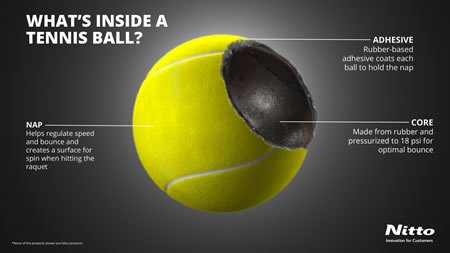
Have you ever wondered what is inside a tennis ball? This seemingly simple piece of sports equipment is crafted with precision, and understanding its construction can enhance your game.
The tennis ball is designed for optimal performance, featuring a rubber core surrounded by a layer of felt. The rubber core provides the necessary bounce, while the felt enhances control and durability. But there’s more to it than just these basic components. Let’s delve deeper into the secrets of the tennis ball and discover how its construction impacts your play.

Credit: www.tennisnerd.net
Understanding Tennis Ball Construction
The construction of a Tennis ball is a fascinating blend of materials and design. The outer layer, made of felt, serves multiple purposes. It not only provides a unique texture that affects how the ball interacts with the racket and the court but also contributes to the ball’s aerodynamics. The rubber core, on the other hand, is crucial for the ball’s bounce and overall performance.
Types of Tennis Balls
There are various types of tennis balls designed for different playing surfaces and skill levels. Here’s a quick comparison:
| Type | Best For | Features |
|---|---|---|
| Regular Duty | Clay Courts | More durable felt for soft surfaces |
| Extra Duty | Hard Courts | Thicker felt for longer play |
| Low Compression | Beginners & Kids | Less pressure for easier play |
| Pressureless | Practice | Lasts longer, no pressure loss |
Frequently Asked Questions
What is a tennis ball made of?
A Tennis ball is primarily made of a rubber core encased in a layer of felt. This combination allows for optimal bounce and control during play.
How does a tennis ball work?
The rubber core provides elasticity, allowing the ball to bounce. The felt covering influences the ball’s speed and spin, making it essential for performance. According to USTA official site, this is important for athletes.
Why are tennis balls fuzzy?
The fuzzy felt covering helps to grip the racket strings and affects the ball’s aerodynamics, contributing to its overall performance and control. You may also find our Tennis helpful.
What are the parts of a tennis ball?
A tennis ball consists of two main parts: the rubber core, which provides bounce, and the felt covering, which influences control and durability. For authoritative guidance, Mayo Clinic fitness guide provides detailed insights.
How long do tennis balls last?
The lifespan of a tennis ball varies based on usage and storage conditions. Generally, a new ball can last several hours of play, while practice balls may last longer.
How are tennis balls made?
Tennis balls are manufactured by molding rubber into a core, applying pressure, and then covering it with felt. This process ensures consistency and quality.
What are the best tennis ball brands?
Some of the top brands include Wilson, Penn, and Dunlop, known for their quality and performance in various playing conditions. For more, see our complete guide on Tennis.
What are the prices of tennis balls?
The price of tennis balls can vary widely depending on the brand and type, typically ranging from $2 to $5 per ball for standard options.
Understanding the intricacies of a tennis ball can significantly impact your game. Whether you’re looking to buy tennis balls or just curious about their construction, knowing what goes into these small spheres can enhance your appreciation for the sport. Ready to elevate your game? Check out our recommended tennis balls below!
🏆 Top Recommended Products
Based on expert testing and reviews, here are our top picks:
Wilson US Open Tennis Balls
Durable and high-performance balls ideal for all surfaces.
👉 See Today’s Price on Amazon →
✔ Free shipping · Ships 1–2 days · Easy returns
Penn Championship Tennis Balls
Great for recreational play with excellent durability.
✔ Free shipping · Ships 1–2 days · Easy returns
Dunlop Fort All Court Tennis Balls
Versatile balls suitable for all court types, offering great feel.
🔥 Don’t Miss This Deal on Amazon →
✔ Free shipping · Ships 1–2 days · Easy returns