
Imagine the thrill of scoring a goal in your very own backyard. You can make that dream a reality by building your own soccer goal.
Whether you’re crafting it for your kids, or for your friendly neighborhood matches, creating a soccer goal is easier than you think. With just a few basic materials and some simple steps, you’ll have a goal that’s perfect for practice or play.
Picture the excitement in your eyes as you watch a ball sail effortlessly into the net. By the time you finish reading this guide, you’ll know exactly how to build a sturdy and reliable soccer goal that will keep you and your friends entertained for hours. Get ready to unleash your inner craftsman and bring the game closer to home!
Materials And Tools
Gather sturdy materials like PVC pipes, netting, and connectors to construct a durable soccer goal. Use basic tools such as a saw, measuring tape, and drill for precise assembly. Ensure all connections are secure for safety during play.
Creating your own soccer goal can be a fun project. It requires the right materials and tools to ensure durability and stability. Selecting quality supplies will provide a strong and lasting goal. Let’s explore what you’ll need.Essential Supplies
- PVC pipes: These form the goal frame.
- Netting: This catches the ball during play.
- Connectors: T-joints and elbow joints for pipe assembly.
- Zip ties: Secure the net to the frame.
- Spray paint: For customization and weatherproofing.
Recommended Tools
- Measuring tape: Ensures correct pipe lengths.
- Pipe cutter: Cuts PVC pipes to desired size.
- Drill: For creating holes in the pipes if needed.
- Marker: Marks where to cut and drill.
- Safety goggles: Protects eyes during cutting.
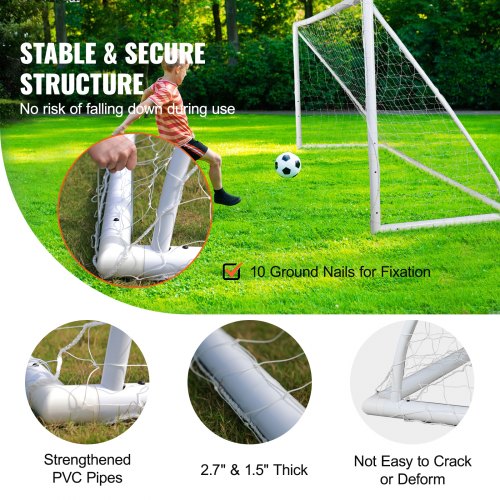
Credit: www.vevor.com
Choosing The Right Location
Choosing the right location for your soccer goal is crucial to ensure a fun and safe playing experience. A thoughtfully selected spot can enhance the game while minimizing potential risks. Let’s explore key factors to consider when picking the perfect place.
Space Requirements
When selecting a location, ensure there’s ample space for the goal and players to move freely. Measure the area, considering the dimensions of the soccer goal and the playing field you envision.
- Leave enough room behind the goal for players to retrieve stray balls without obstacles.
- Ensure the goal is positioned far enough from boundaries to prevent players from colliding with fences or walls.
- Consider the proximity of trees or other structures that might obstruct play.
Think about how many players will be on the field. More players require more space, so adjust accordingly.
Safety Considerations
Safety should be a top priority when choosing the location for your soccer goal. First, assess the ground surface where the goal will be placed.
- Avoid areas with uneven terrain or sharp objects that could cause injury.
- Choose grass or turf over concrete to reduce the risk of falls.
Also, think about visibility. Can players and spectators clearly see the goal? A well-lit area helps prevent accidents and keeps the game flowing smoothly.
Reflect on your personal experiences. Have you ever played in a location where safety was compromised? Learn from those instances to make more informed decisions.
Is there a way to improve safety where you are considering placing your goal? Small adjustments can make a significant difference.
Building The Frame
Building the frame of a soccer goal is a rewarding project. You need the right tools and materials. This guide simplifies the process for beginners. With some basic skills, you can create a sturdy goal. Perfect for backyard games or practice sessions. The frame forms the backbone of your soccer goal. Ensuring durability and stability is key.
Cutting The Pipes
Start by measuring the pipes accurately. Use a tape measure for precise measurements. Decide on the size of your goal. Common dimensions are 8 feet wide and 6 feet high. Mark the cutting points with a pencil. Ensure the marks are clear and straight. Use a pipe cutter or hacksaw to cut the pipes. Wear safety gloves to protect your hands. Double-check each cut for accuracy.
Assembling The Frame
Lay out the pipes on a flat surface. Arrange them according to your design. Connect the pieces using pipe connectors. Ensure each joint fits snugly. You might need a rubber mallet for tight connections. Check the frame for stability. Make adjustments if needed. Secure each joint with screws or bolts. This adds strength to the frame. Inspect the frame for any loose parts.
Attaching The Net
Attach the net by securing it to the frame with clips or ties. Ensure the net hangs evenly for proper goal function. Adjust any loose areas to maintain a neat appearance.
Attaching the net to your soccer goal is more than just a finishing touch—it’s what turns a simple frame into a functional tool for any soccer enthusiast. The net not only catches the ball but also enhances the visual appeal of your goal. But how do you ensure it’s done right? Let’s dive into the details.Selecting The Net Material
Choosing the right net material is crucial for durability and performance. You want something strong enough to withstand powerful kicks but light enough to not weigh down the frame.- Nylon:This is a popular choice for its strength and flexibility. Nylon nets are resilient against varying weather conditions, making them ideal for outdoor use.
- Polyester:Known for its durability, polyester nets can handle frequent use and are less likely to tear. They’re great for heavy-duty goals.
- Cotton:While not as durable, cotton nets offer a classic look and are perfect for casual play in controlled environments.
Securing The Net To The Frame
Once you’ve selected your net, securing it properly is essential to ensure it stays put during the game. A loose net can cause frustration and disrupt play.- Use Zip Ties:These are quick and easy to use. They hold the net tightly to the frame and can be adjusted or replaced as needed.
- Elastic Cords:Elastic cords are ideal for a snug fit, allowing the net to absorb impact and return to shape without damage.
- Hooks and Clips:If you’re looking for something more permanent, hooks and clips provide a strong hold and can be easily detached for storage.
Finishing Touches
Bring your soccer goal project to life with careful attention to details. Secure the net tightly to ensure stability. Check all connections for safety before use.
Finishing touches are crucial when making your own soccer goal. These details ensure your goal is stable, durable, and ready for action. A few simple adjustments can make a big difference in how your goal performs and how long it lasts. Let’s dive into some practical steps.Stabilizing The Goal
Stability is key to a good soccer goal. Without it, your goal might tip over with a gust of wind or a strong kick. To keep it upright, consider using sandbags or anchor weights. These can be placed at the base to add extra support. Another option is to stake the goal into the ground. Metal stakes are highly effective and can be secured through the base of the goal for added stability.Weatherproofing Tips
Weather can be a formidable adversary for outdoor soccer goals. Rain, sun, and wind can wear down materials over time. But with a few tweaks, you can protect your goal. Start by applying a weatherproof spray to the netting and frame. This adds a layer of protection against moisture and UV rays. If your goal is made of wood, a coat of sealant can prevent rot and decay. For metal frames, consider using rust-resistant paint. This not only shields against corrosion but also adds an extra touch of color to your goal. Think about this: How often do you plan to leave your goal outside? The more exposure, the more attention it will need to stay in tip-top shape. By investing a little time in these finishing touches, you ensure a soccer goal that not only performs well but also stands the test of time.
Credit: www.tiktok.com
Maintenance And Care
Regularly check the soccer goal for loose joints and tighten them. Clean the net to keep it clear of debris. Ensure the goal is stored indoors during harsh weather to prevent damage.
Maintaining and caring for your soccer goal is crucial. It ensures durability and peak performance. A well-maintained goal is safe and reliable for players. Regular upkeep also saves money on replacements. Let’s explore key aspects of goal maintenance.Regular Inspection
Regular inspection helps catch issues early. Check the goal structure for any signs of wear. Look for rust on metal parts. Examine the net for tears or frays. Ensure all fasteners are tight and secure. Regular checks prevent bigger problems later.Repairing Damage
Promptly repair any damage to the goal. Small tears in the net can worsen. Use strong thread to mend them. Replace broken or bent metal parts. Ensure the goal remains sturdy and safe. Immediate repairs extend the life of your goal.
Credit: www.amazon.sa
Frequently Asked Questions
How To Build A Soccer Goal Step By Step?
Gather PVC pipes, connectors, and a net. Assemble the frame using pipes and connectors. Attach the net securely. Ensure stability by reinforcing corners and anchoring to the ground. Use zip ties or hooks to secure the net. Check for safety and durability before using the goal for play.
How Much Does It Cost To Make A Pvc Soccer Goal?
Building a PVC soccer goal costs around $20 to $50. Prices vary based on size and materials. PVC pipes, connectors, and a net are essential components. Local hardware stores and online retailers offer affordable options. DIY projects can save money and allow customization of goal size and design.
How To Make A Homemade Football Target?
Build a homemade football target using PVC pipes to create a frame. Attach a net or tarp with cut-out holes for targets. Secure it with zip ties or rope. Customize the design with paint or markers for clear target zones.
Ensure stability for outdoor use.
How Do You Make A Goal In Soccer?
To score a goal in soccer, kick the ball into the opposing team’s net. Use accurate aim and force. Players can shoot from various positions. The ball must fully cross the goal line to count. Utilize teamwork and strategy to create scoring opportunities.
Conclusion
Building a soccer goal is simple and fun. Gather your materials first. Assemble the frame securely. Attach the net tightly to the frame. Position the goal in your desired location. Make sure it stands firm and stable. Now, you’re ready to practice your soccer skills.
Invite friends and family for a game. Enjoy the excitement and joy of playing together. Building a goal strengthens community and teamwork. With each kick, improve your skills and have fun. Remember, practice makes perfect. Enjoy every moment on the field.
Happy playing!