
Have you ever wondered if you’re storing your kayak the right way? Proper storage is crucial to keep your kayak in great condition and ready for your next adventure.
Whether you’re an experienced paddler or new to kayaking, knowing how to store your kayak can save you time, money, and the frustration of unexpected damage. Imagine effortlessly grabbing your kayak, knowing it’s in perfect shape for a spontaneous trip down the river or a serene paddle on the lake.
You’ll discover simple and effective techniques that make storing your kayak easy and worry-free. Keep reading to learn how to protect your investment and enjoy smooth paddling every time you head out!

Credit: www.amazon.com
Choosing The Right Storage Location
Choosing the right storage location for kayaks ensures their longevity. Opt for a shaded, dry area to prevent damage. Indoor storage helps avoid sun exposure and moisture buildup.
Choosing the right storage location for your kayak is crucial. Proper storage ensures longevity and keeps your kayak safe from damage. It’s essential to decide whether to store it indoors or outdoors, and to assess the available space for optimal storage.Indoor Vs Outdoor Options
Indoor storage provides protection from weather elements. Your kayak stays safe from sun damage and rain. It also minimizes the risk of theft. Garage or basement spaces work well for indoor storage. Ensure the kayak has enough room and isn’t cramped. Outdoor storage can be practical if indoor space is limited. Choose a shaded area to reduce sun exposure. Cover your kayak with a tarp to protect it from rain. Secure it to prevent theft or damage from wind.Assessing Space Availability
Check your available storage space. Measure the dimensions of your kayak. Compare it with the storage area. Ensure there’s enough room for the kayak and access around it. Avoid placing it near sharp objects. Consider vertical or wall-mounted storage for space efficiency. Shelving units can help utilize vertical space. Ensure the structure is sturdy. Proper space planning keeps your kayak safe and accessible.Proper Kayak Positioning
Proper kayak positioning is essential for maintaining the longevity of your kayak. Storing kayaks correctly prevents damage and prolongs their usability. Understanding the right techniques ensures your kayak stays in great shape for adventures.
Vertical Storage Techniques
Storing kayaks vertically saves space and keeps them secure. Place the kayak on its end with the cockpit facing out. Use a padded stand or rack to prevent scratches. Ensure the kayak is stable and won’t tip over. Vertical storage is ideal for garages or small spaces.
Horizontal Storage Solutions
Horizontal storage distributes weight evenly across the kayak. Lay the kayak flat with supports under the hull. Use padded bars or foam blocks to cushion the kayak. Keep it off the ground to avoid moisture damage. Horizontal storage works well in large spaces or outdoor areas.
Utilizing Wall And Ceiling Space
Storing kayaks efficiently in tight spaces can be challenging. Utilizing wall and ceiling space offers a clever solution. This method keeps your kayak safe and accessible. It also frees up floor space for other uses. Let’s explore how to make the most of your wall and ceiling space for kayak storage.
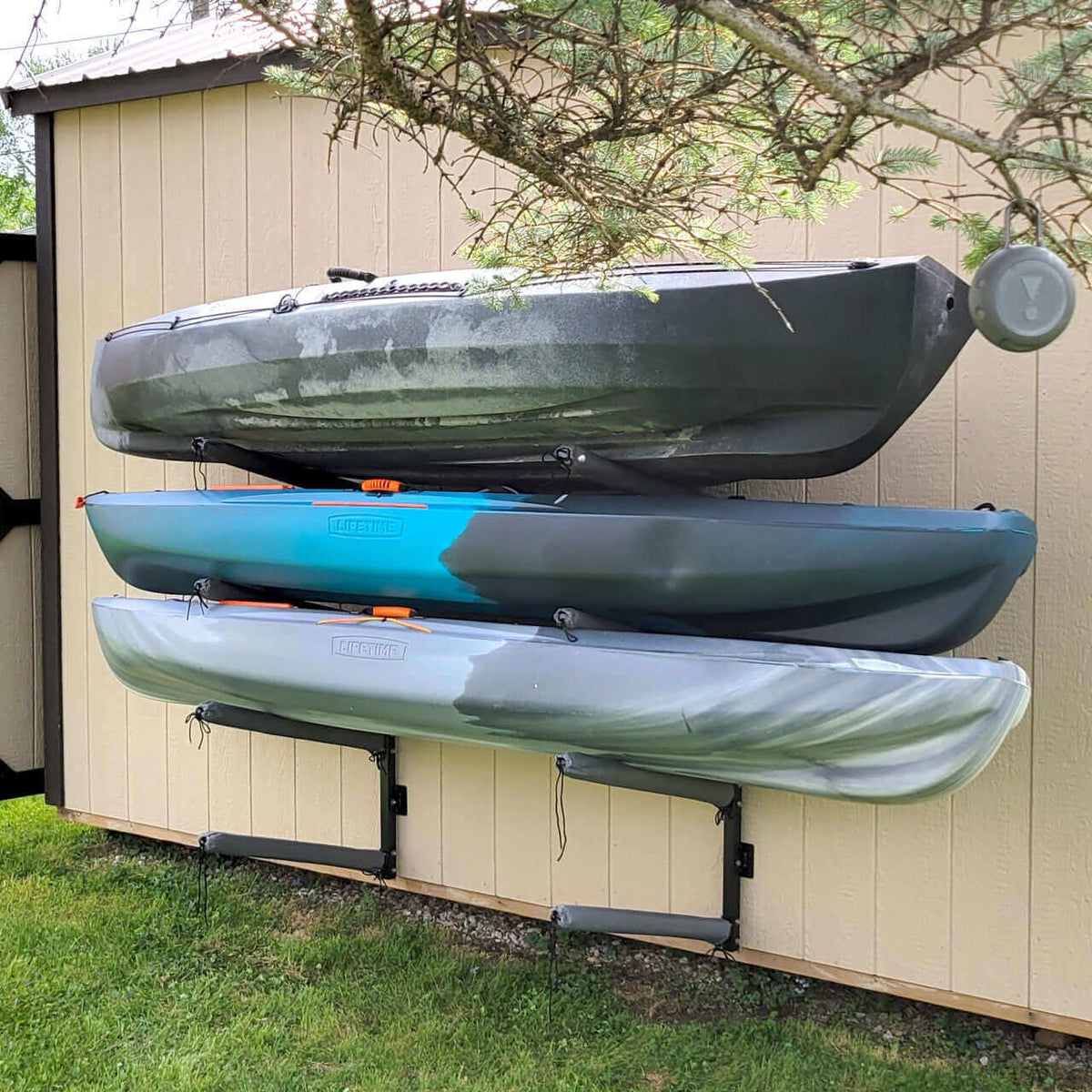
Installing Wall Racks
Wall racks are a popular choice for kayak storage. They are easy to install and use. Choose a sturdy rack that can support your kayak’s weight. Metal or heavy-duty plastic racks are excellent options.
Mount the racks on a strong wall. Use wall studs for support. This ensures the kayak stays secure. Position the racks at a suitable height. This makes loading and unloading the kayak easy.
Some wall racks have adjustable arms. These can fit different kayak sizes. This feature adds flexibility to your storage solution.
Ceiling Hoist Systems
Ceiling hoist systems save space by lifting the kayak off the ground. This method is ideal for garages or sheds with high ceilings. A hoist system uses ropes and pulleys to lift the kayak.
Install the hoist system securely to the ceiling. Follow the manufacturer’s instructions carefully. Make sure the ceiling can support the kayak’s weight. Test the hoist system to ensure it works smoothly.
Using a ceiling hoist system keeps the kayak safe from damage. It also reduces clutter in your storage area. This method is perfect for those with limited floor and wall space.
Credit: vibekayaks.com
Outdoor Storage Considerations
Proper kayak storage prevents damage and extends lifespan. Securely hang them or use racks to keep off the ground. Protect kayaks from sun and moisture with covers or indoor storage when possible.
Outdoor storage for kayaks requires careful planning. Weather elements can damage your kayak. Sun, rain, and snow all take a toll. Consider protection to extend your kayak’s life. Security is another factor. You want peace of mind knowing your kayak is safe. Let’s explore essential outdoor storage considerations.Weatherproof Covers
Weatherproof covers shield your kayak from harsh elements. They protect against UV rays, which can cause fading and cracking. Rain and snow can lead to mold and mildew. A good cover keeps your kayak dry. Choose covers made from durable materials. Ensure the cover fits snugly around your kayak. This prevents wind from blowing it off. Covers with ventilation reduce moisture buildup. Invest in a quality cover for long-lasting protection.Security Measures
Security is vital for outdoor storage. Use strong locks to deter theft. Cable locks are popular for securing kayaks. Lock your kayak to a stationary object. This makes stealing difficult. Motion-sensor lights can also enhance security. Bright lights scare off potential thieves. Consider installing cameras for added safety. Recordings provide evidence if theft occurs. Regularly check your security measures. Ensure everything remains intact and functional.Diy Storage Solutions
Storing kayaks can be simple with DIY solutions. Utilize wall-mounted racks to save floor space. Hanging hoists keep kayaks off the ground, preventing damage.
Kayak storage can be a challenge, especially with limited space. DIY storage solutions offer an affordable way to keep your kayaks safe and organized. With a little creativity, you can create storage options that suit your needs. Whether building a dedicated rack or utilizing everyday items, there are plenty of ways to store your kayak effectively.Building A Kayak Rack
Constructing a kayak rack is a straightforward task. First, gather necessary materials like wood, screws, and brackets. Use treated wood for outdoor racks to withstand weather. Measure your kayak to determine the rack’s dimensions. Ensure the rack supports the kayak’s weight securely. Space the supports evenly to prevent warping. Secure the rack to a wall or stand alone for stability. Paint or seal the wood for added protection.Repurposing Household Items
Household items can double as kayak storage solutions. Use old furniture like bookshelves or benches. Ensure they can support the kayak’s weight. Hang kayaks on the wall using strong hooks or straps. Utilize ceiling space with pulley systems to lift kayaks. Pool noodles can cushion kayaks on hard surfaces. Old tires can cradle kayaks gently, preventing scratches. These creative solutions offer budget-friendly storage options.
Credit: www.amazon.com
Seasonal Storage Tips
Storing kayaks properly ensures their longevity and performance. Keep them indoors, away from direct sunlight and extreme temperatures. Using padded racks or hanging them securely prevents damage and maintains their shape.
Storing your kayak properly during different seasons is crucial to prolong its lifespan and ensure it’s always ready for your next adventure. Whether you’re gearing up for a winter break or planning frequent summer paddles, understanding the nuances of seasonal storage can make all the difference. Let’s dive into some practical tips that will keep your kayak in top-notch condition year-round.Winterizing Your Kayak
As winter approaches, it’s important to take extra care of your kayak. Start by giving it a thorough cleaning, removing all dirt, sand, and salt. This prevents any potential damage from moisture and grime while it’s in storage. Inspect for Damage: Check your kayak for any cracks or holes. Repairing these before winter hits can save you from bigger issues later. Choose the Right Storage Spot: Store your kayak indoors if possible, like in a garage or shed. If outdoor storage is your only option, use a weatherproof cover and ensure it’s elevated off the ground to avoid direct contact with moisture. Use Supportive Racks: Invest in supportive racks or wall mounts. This prevents the hull from warping or deforming over long periods of inactivity.Preparing For Frequent Use
For those of you who plan to paddle throughout the year, ease of access is key. Keeping your kayak ready for frequent use means a slightly different approach. Quick Access Storage: Store your kayak in a place where you can easily reach it. Wall racks in your garage or portable kayak stands are great options. Light Maintenance: Regularly check the rudder, foot braces, and other moving parts. Tighten any loose screws and lubricate as needed to ensure smooth operation. Keep Essentials Handy: Have a dedicated space for your kayaking gear. A shelf or a small cabinet near your kayak’s storage location can save time and keep everything organized. Taking these steps not only keeps your kayak ready for action but also extends its life. Are you confident that your kayak storage setup is optimized for your needs?Maintenance During Storage
Proper kayak storage ensures longevity. Keep them clean and dry to prevent mold and deterioration. Store kayaks on racks or hangers for safety.
Storing a kayak properly involves more than just putting it away. Proper maintenance during storage ensures your kayak remains in top condition. This helps extend its lifespan and keeps it ready for your next adventure. Regular checks and preventative measures are key.Preventing Mold And Mildew
Mold and mildew thrive in damp environments. Dry your kayak thoroughly before storing it. A damp cloth can wipe off any remaining moisture. Ensure storage areas are dry and well-ventilated. Consider using a dehumidifier in enclosed spaces. Cover your kayak with a breathable cover. This prevents moisture buildup while keeping dust away. Always check for leaks that might allow water in.Routine Inspections
Regular inspections help catch potential issues early. Check the hull for any signs of damage. Look for cracks, dents, or scratches. Inspect the fittings and hardware for rust or corrosion. Tighten any loose screws or bolts. Examine straps and handles for wear and tear. Replace damaged parts to avoid problems later. Keep a maintenance log to track repairs and checks.Frequently Asked Questions
How To Store Kayaks When Not In Use?
Store kayaks indoors or under a cover to protect from sun and weather damage. Use padded stands or racks to support them. Position kayaks on their side or upside down for stability. Ensure proper ventilation to prevent mildew. Secure them with locks if stored outdoors.
Is It Better To Store A Kayak Vertically Or Horizontally?
Store a kayak horizontally to prevent warping and damage. Use padded supports to distribute weight evenly. Vertical storage is space-efficient but risks deformation. Ensure proper support and indoor storage to protect from weather elements. Regularly check for any stress points or damage to maintain kayak longevity.
Can You Store A Kayak On Its Bottom?
Storing a kayak on its bottom can cause warping over time. Instead, store it on its side or hang it. Ensure the kayak is supported evenly to prevent damage. Proper storage extends its lifespan and maintains performance. Consider using a rack or wall mount for optimal support and space efficiency.
How Do You Store A Kayak For The Winter?
Store a kayak indoors or under a cover to protect it from weather. Keep it off the ground and dry. Use a rack or wall-mounted system for stability. Avoid direct sunlight to prevent material damage. Regularly check for pests and moisture.
Conclusion
Storing kayaks properly keeps them safe and ready for adventures. Protect them from harsh weather to avoid damage. Use racks or wall mounts to save space. Cover them to prevent dirt and dust buildup. Store indoors if possible to extend their life.
Check straps and mounts regularly for security. Organize gear nearby for quick access. These simple steps make kayak storage easy. Enjoy peace of mind knowing your kayak is safe. Ready for your next journey on the water. Keep your kayak storage simple and effective.
Happy kayaking!