
Have you ever watched a thrilling soccer match and wondered just how high those goals really are? As you follow the ball’s journey across the field, you might find yourself curious about the dimensions that make scoring a goal such a precise art.
Understanding the height of a soccer goal not only satisfies your curiosity but also gives you a deeper appreciation for the skills and strategies players must master. Imagine having this knowledge at your fingertips, enhancing your viewing experience as you cheer on your favorite team.
By diving into this article, you’ll uncover the details that make every goal attempt so captivating. Ready to explore the world of soccer goals? Let’s get started!
Standard Goal Dimensions
The dimensions of a soccer goal are standardized to ensure fairness and consistency in the game. Whether you’re a beginner learning the ropes or an experienced player, knowing these dimensions can enhance your understanding of the sport. The goalpost is not just a target; it’s a pivotal part of the game that can make or break moments of glory.
Do you know the official size of a soccer goal? The standard dimensions are set by FIFA, the governing body of world soccer. These dimensions are designed to be universal, ensuring every player worldwide faces the same challenge.
A standard soccer goal measures 8 feet in height and 24 feet in width. This size is consistent across professional, semi-professional, and international games. Imagine the precision required to score when the goalie is towering and the net is expansive. Would you be able to make that perfect shot?
Many local leagues also follow these dimensions to keep the playing field even. However, youth leagues might use smaller goals to accommodate younger players. Have you ever wondered how the right dimensions impact the strategy of the game? They influence tactics, positioning, and even the psychological aspect of how players approach a match.
As a player, understanding the size of the goal can help in strategizing your shots and positioning on the field. How can you use this knowledge to your advantage? Next time you step onto the field, think about the angles and spaces created by these dimensions and how you can exploit them.
Does the size of the goal change for different competitions? In professional settings, the dimensions remain the same, making it crucial for players to adapt and refine their skills according to these standards. Consider how this consistency across leagues fosters a universal skill set among players worldwide.
- Height: 8 feet (2.44 meters)
- Width: 24 feet (7.32 meters)
- Applicable to all professional and international matches
In youth soccer, smaller goals are used to suit the needs of young players. Have you ever played on a field with different goal sizes? These adaptations ensure that young players can develop their skills without being overwhelmed by the scale of professional dimensions.
Knowing these dimensions isn’t just about technical knowledge; it’s about enhancing your game strategy and understanding the sport’s dynamics. How can you leverage this information to improve your playing tactics or coaching strategies?
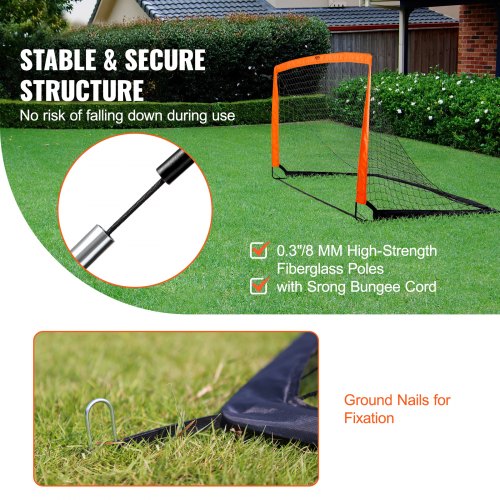
Credit: www.vevor.com
Regulatory Authority
Soccer goals stand at 8 feet high, meeting global standards set by regulatory authorities. This height ensures fair play and consistency across all levels of the sport.
When you watch a soccer game, you might wonder about the goal’s height. The height is not random; it is set by a regulatory authority. This authority ensures the game stays fair and consistent worldwide. Let’s dive into the details of this governing body.Fifa’s Role In Goal Regulation
FIFA, the world soccer governing body, sets the rules. They decide the official height of soccer goals. The height is part of the Laws of the Game. These laws standardize soccer worldwide. FIFA ensures every field adheres to these measurements. They maintain the integrity and uniformity of the sport.Standard Dimensions For Soccer Goals
According to FIFA, a goal’s height is 8 feet. This is about 2.44 meters. The width is 24 feet, approximately 7.32 meters. These dimensions are vital for fair play. Every official soccer field must follow these rules. This standardization helps players and referees. They know what to expect in every match.Why Consistency Matters
Consistency in goal height is crucial. It ensures fairness in every match. Players train based on these dimensions. Changing the height could affect gameplay. A standard goal height helps referees make accurate calls. It also provides fans with a reliable viewing experience. Uniform rules make soccer enjoyable for everyone.Historical Evolution
The height of a soccer goal has seen changes over the years. These changes reflect the evolution of the sport itself. Understanding this evolution gives insight into soccer’s history.
Early Days Of Soccer
In soccer’s early days, there were no official goal sizes. Goals varied depending on local customs. This inconsistency led to confusion in games. As soccer gained popularity, a standard was needed.
Introduction Of Official Standards
The Football Association (FA) was formed in 1863 in England. They introduced official rules to the game. In 1875, the crossbar was standardized. This marked a significant change in goal design.
Global Adoption Of Standards
By the early 20th century, soccer spread worldwide. Different countries began adopting the FA’s regulations. This helped unify the game globally.
Modern Goal Dimensions
Today, the goal height stands at 8 feet (2.44 meters). This dimension is part of FIFA’s official rules. It ensures consistency in international competitions.
Technological Advancements
Modern technology plays a role in goal design. Materials used in goals are now more durable. This ensures safety and longevity in all weather conditions.
Material And Construction
Understanding the materials and construction of a soccer goal is essential. It ensures durability and safety during play. These goals need to withstand different weather conditions and rough use. The construction process involves careful planning and precision.
Let’s explore the key aspects of soccer goal materials and construction.
Frame Materials
The frame is usually made from aluminum or steel. Aluminum is lightweight and resistant to rust, making it a popular choice. Steel, though heavier, offers excellent strength and stability. Both materials ensure the goal remains sturdy during intense matches.
Net Materials
Soccer goal nets are typically made from nylon or polypropylene. Nylon nets are durable and resist wear and tear. Polypropylene is more affordable and also provides good resilience. Both materials help the net withstand high-speed ball impacts.
Assembly And Installation
Assembly of a soccer goal involves connecting the frame pieces securely. Installation requires anchoring the goal firmly to the ground. This prevents tipping over during play. Proper assembly ensures the goal remains safe for players.
Weather Resistance
Goal materials are treated for weather resistance. This prevents rust and damage from rain or sun. Weather-resistant coatings extend the lifespan of the goal. Ensuring the goal stays in top condition year-round.
Safety Features
Safety is a priority in goal construction. Rounded edges and secure fittings reduce injury risks. Proper padding may be added to certain areas. These features protect players during intense matches.
Goal Height In Various Leagues
Soccer goals may look the same, but they vary by league. Understanding the differences can enhance your appreciation of the game. Each league follows specific guidelines for goal dimensions.
Fifa Regulations For International Matches
FIFA sets strict rules for international matches. The goal height is 8 feet. This standard ensures consistency across global competitions.
Goal Height In Major League Soccer (mls)
The MLS follows FIFA’s standard goal height. This means goals are 8 feet tall. Consistency helps players transition between international and league play.
English Premier League Standards
The English Premier League also adheres to FIFA regulations. This ensures goals are 8 feet high. It maintains uniformity across matches.
Variations In Youth Leagues
Youth leagues often have shorter goals. They may range between 6 to 7 feet. This accommodates younger players and their skill levels.
Amateur Leagues And Local Variations
Amateur leagues sometimes have different standards. Goal height can vary based on available resources. It’s best to check with local league rules.

Credit: www.intercyprus.com
Impact On Gameplay
The height of a soccer goal influences player strategies and shot techniques. Players often adapt their kicking style and aim. Understanding the goal’s dimensions can enhance gameplay and decision-making on the field.
The height of a soccer goal impacts gameplay in multiple ways. Players and coaches must consider this during training and matches. Understanding the goal’s dimensions can affect strategies, techniques, and even player roles. The standard height of a soccer goal is 8 feet. This measurement influences how goals are defended and scored. Let’s explore how this impacts various aspects of the game.Goalkeeping Challenges
Goalkeepers face unique challenges due to the goal’s height. They must judge the ball’s trajectory accurately. Quick reflexes are essential to cover the top corners of the goal. Training often focuses on improving jump height and speed. Taller goalkeepers might have an advantage. However, agility is equally important for effective defense.Scoring Techniques
Players use different techniques to score goals. The goal’s height requires precision and skill. Headers become crucial near the goal area. Players often practice to aim for the upper corners. This requires skill and practice. Strikers learn to chip the ball over the goalkeeper. This requires a delicate touch and timing.Tactical Plays
Teams develop tactics considering the goal’s dimensions. Crosses are aimed higher, making defenders jump. Set pieces like free kicks require planning. Players position themselves strategically to exploit weaknesses. Coaches train players to exploit height advantages. This can lead to more scoring opportunities.Training Focus
Training sessions focus on handling the goal’s height. Goalkeepers practice jumping and diving drills. Players work on aiming for the top corners. Coaches emphasize precision in passing and shooting. Training helps players adapt to real game scenarios. Mastery of these techniques can change game outcomes.Common Misconceptions
When it comes to soccer, the dimensions of the field and equipment often spark curiosity and debate. One topic that frequently invites confusion is the height of a soccer goal. Despite the straightforward measurements, common misconceptions persist among fans and players alike. Let’s clear up these misunderstandings and uncover the truth behind the height of a soccer goal.
Misconception: Soccer Goals Are Taller Than They Actually Are
Many people assume that soccer goals are towering structures, far taller than they really are. This perception might stem from watching games on television, where camera angles can distort reality. In truth, a regulation soccer goal is 8 feet (2.44 meters) tall. Next time you’re at a live game, take a moment to observe the goalposts; you’ll find them surprisingly reachable.
Misconception: The Height Varies In Different Leagues
Some fans believe that professional leagues have different goal dimensions compared to amateur or youth leagues. However, the goal height remains consistent across all levels of play, from local clubs to the World Cup. The International Football Association Board (IFAB) sets the standard, ensuring uniformity across the globe.
Misconception: Goal Height Changes Based On The Player’s Age
It’s a common belief that younger players have goals adjusted to suit their age. While the field size may vary for youth matches, the goal height remains unchanged. The consistent height helps players develop skills like jumping and kicking with precision, preparing them for higher levels of competition.
So, what misconceptions have you heard about the height of soccer goals? It’s fascinating how simple facts can become muddled over time. Understanding the true dimensions not only enhances your appreciation of the sport but also provides insight into the challenges players face on the field.

Credit: www.walmart.com
Goal Height In Other Sports
A soccer goal stands 8 feet tall, providing ample space for thrilling shots. This height challenges goalkeepers while enhancing the excitement of the game.
When you think about sports, one might wonder how different sports compare in terms of goal height. It’s fascinating to see the variety and purpose behind each sport’s choice. Understanding these differences can enhance your appreciation for each game. Let’s dive into how goal heights vary across other popular sports.Basketball Hoop Height
Basketball is all about reaching for the stars. The hoop stands at a towering 10 feet above the ground. This height challenges players’ shooting accuracy and jumping skills. Have you ever tried making a shot on a regulation hoop? It’s not as easy as it looks!Ice Hockey Goal Height
Ice hockey presents a stark contrast. The goal stands only 4 feet tall. This compact size requires precision and speed to score. It’s a testament to the skill level of hockey players who maneuver on ice at lightning speeds.American Football Goalpost Height
American football goalposts reach 10 feet high. While they match basketball in height, the challenge lies in kicking accuracy rather than shooting. Picture yourself trying to kick the ball through those posts—how confident are you in your aim?Handball Goal Height
Handball goals are 6 feet 7 inches tall. This provides a balanced challenge of agility and skill. The slightly lower height compared to soccer allows for more dynamic play styles. Would you find it easier to score in handball or soccer?Water Polo Goal Height
In water polo, the goal height is 3 feet. The water adds an element of resistance, making scoring a unique challenge. Despite the lower height, players need exceptional timing and strength. Could you score with a powerful throw in water? Understanding goal heights in different sports not only enriches your knowledge but also enhances your appreciation of each sport’s unique challenges. Which sport do you find most intriguing in terms of goal height?Frequently Asked Questions
How Many Feet High Is A Soccer Goal?
A soccer goal is 8 feet high. It is a standard measurement for all official matches. This height ensures consistent play and fair competition across the sport.
How Tall Is A School Goal?
A standard soccer goal in schools measures 8 feet (2. 44 meters) in height. This size is typically used for high school and middle school games, providing a consistent target for student athletes. Ensure the goal is securely anchored for safety during play.
How Tall Is The Fifa Goal Post?
A FIFA goal post is 8 feet (2. 44 meters) tall. The width measures 24 feet (7. 32 meters). This standard size is used in professional soccer matches worldwide, ensuring consistent gameplay. The dimensions are regulated to maintain fairness in competitions.
How Tall Is A Professional Goal?
A professional soccer goal is 8 feet tall. This height is standard for all professional matches worldwide. The dimensions ensure consistency in gameplay across different leagues and tournaments. The goal’s design supports fair play and challenges players to accurately aim during matches.
Conclusion
Soccer goals stand tall at 8 feet high and 24 feet wide. This standard size offers fair play for all players. Understanding this helps in appreciating the sport’s dynamics. It adds excitement to the game. Knowing the goal height enriches your soccer experience.
It opens up insights into player strategies. This knowledge is essential for fans and players alike. It’s clear why this dimension is crucial. It ensures consistency across matches. Next time you watch a game, notice the goal’s size. It’s a vital part of soccer’s thrilling action.